Spanish beer: family brewers, the caña and a craft scene that wins medals
Spanish beer from Mahou, Damm and Estrella Galicia to Basqueland and La Pirata: who brews it, why most of it is drunk at the bar, what especial and extra mean, and the craft brewers behind the medals.
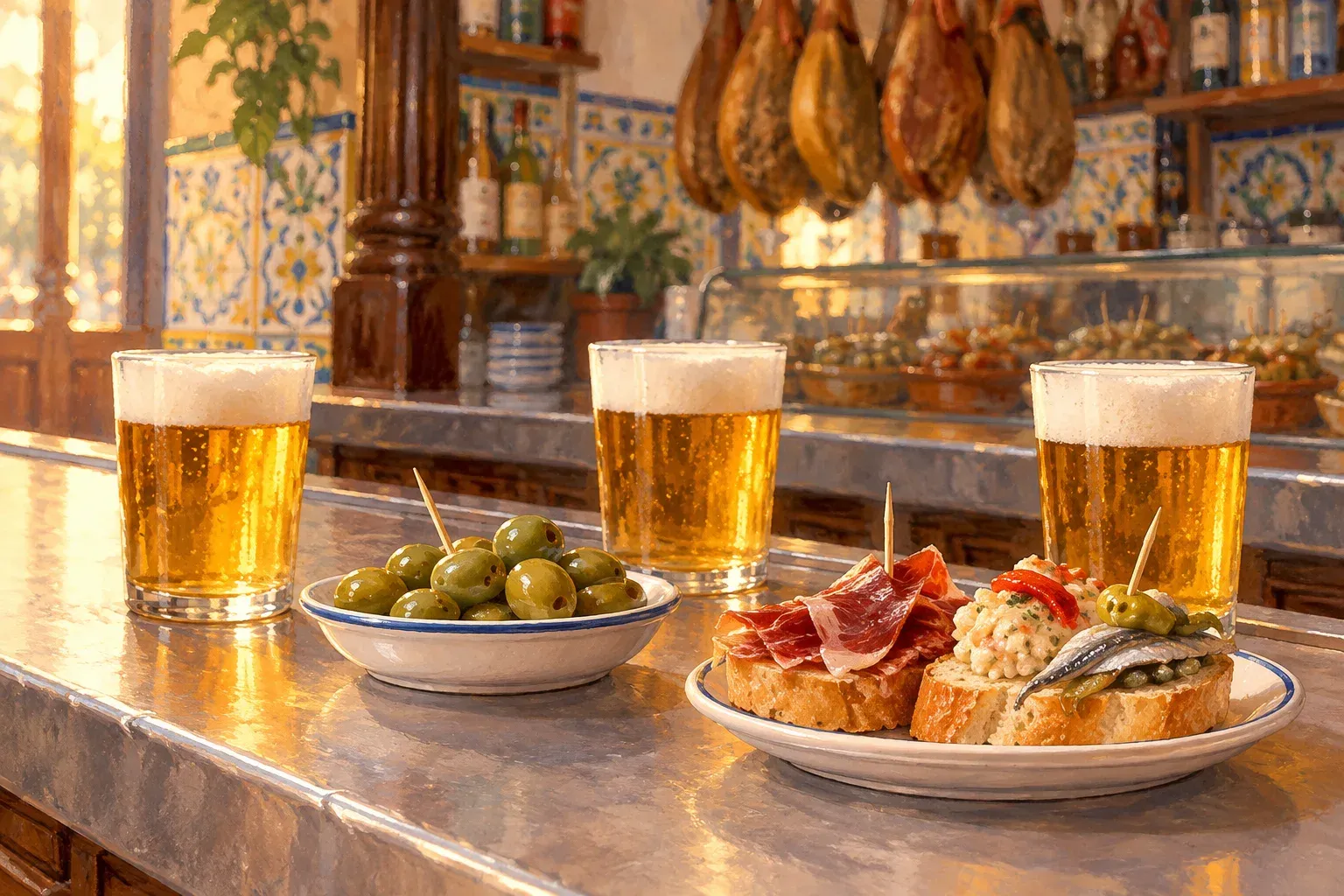
Spain brewed 41.5 million hectolitres of beer in 2025, more than any EU country except Germany, and most of that beer still comes from Spanish family groups.
Who brews it
Cerveceros de España, the brewers’ association, lists the 2025 output by group. Mahou-San Miguel led with 12.7 million hectolitres, then Damm with 11.1 million, Heineken España, the owner of Cruzcampo, with 9.9 million and Hijos de Rivera, the brewer of Estrella Galicia, with 5.6 million. Heineken is the only multinational among the four. The Spanish groups grew by buying regional brewers: Mahou took San Miguel in 2000 and later Alhambra of Granada, and Damm took Estrella de Levante of Murcia. In the Canaries, Dorada and Tropical belong to a company AB InBev controls, and in Zaragoza La Zaragozana brews Ambar and the main Moritz beers for the Roehrich family.
German and Alsatian brewers stand at the start of several of these firms. The founders of Damm and Moritz came from Alsace, and La Zaragozana hired the German brewer Charles Schlaffer in 1900. In Galicia, José María Rivera started Spain’s first hop growing during the First World War.
A beer for the bar
Spaniards drink most of their beer out: 64% of it in bars and restaurants in 2025, the association reports, and about 90% of drinking with company or food. The usual order is a caña, a small draught beer. Tourists drink about 30% of the beer consumed in Spain. Alcohol-free beer is mainstream, at 14% of consumption.
The big brands are pale lagers, and their brewers describe them in their own ways. Damm calls Estrella Damm a Mediterranean lager, brewed with rice to its 1876 recipe; Mahou Cinco Estrellas is brewed with maize; Estrella Galicia labels its Especial a Helles Exportbier; Cruzcampo calls its beer a pilsen. Damm’s Voll-Damm, first brewed in 1953, is a strong Märzen. The words on Spanish labels follow the law: a cerveza especial has an original extract of 13% to under 15%, a cerveza extra at least 15%, and sin alcohol means under 1% alcohol.
Craft
Craft is small in Spain. The association counts 261 brewers making under 50,000 hectolitres a year, about 180,000 hectolitres between them. When Montseny in Catalonia and Domus in Toledo started in 2007, Spain had only three craft breweries, by one Toledo paper’s count. Barcelona’s scene grew around Steve Huxley’s brewing school, where the founders of Garage Beer Co met. Four laid-off workers founded Naparbier near Pamplona as a cooperative in 2009.
The medals now go to a few names. The Barcelona Beer Challenge named La Pirata of Súria best brewery in 2019, and Basqueland of Hernani in 2021, 2022, 2024 and 2026. In 2025 Hijos de Rivera bought into Basqueland.
Sources
Checked .
- Informe Socioeconómico del Sector de la Cerveza en España 2025 — Cerveceros de España
- Real Decreto 678/2016, norma de calidad de la cerveza — Boletín Oficial del Estado
- Estrella Damm — Damm
- Estrella Galicia — Hijos de Rivera
- Hijos de Rivera — Wikipedia
- Premios — Barcelona Beer Challenge
- De un garaje a toda una industria: así es la historia de la cervecera toledana Domus — Toledo Diario