British beer: cask ale, Burton's IPA and a brewing shake-out
British beer from Burton's India pale ale and CAMRA's real ale to the Beer Orders, the craft wave and the 2025–26 closures, with the breweries behind them.
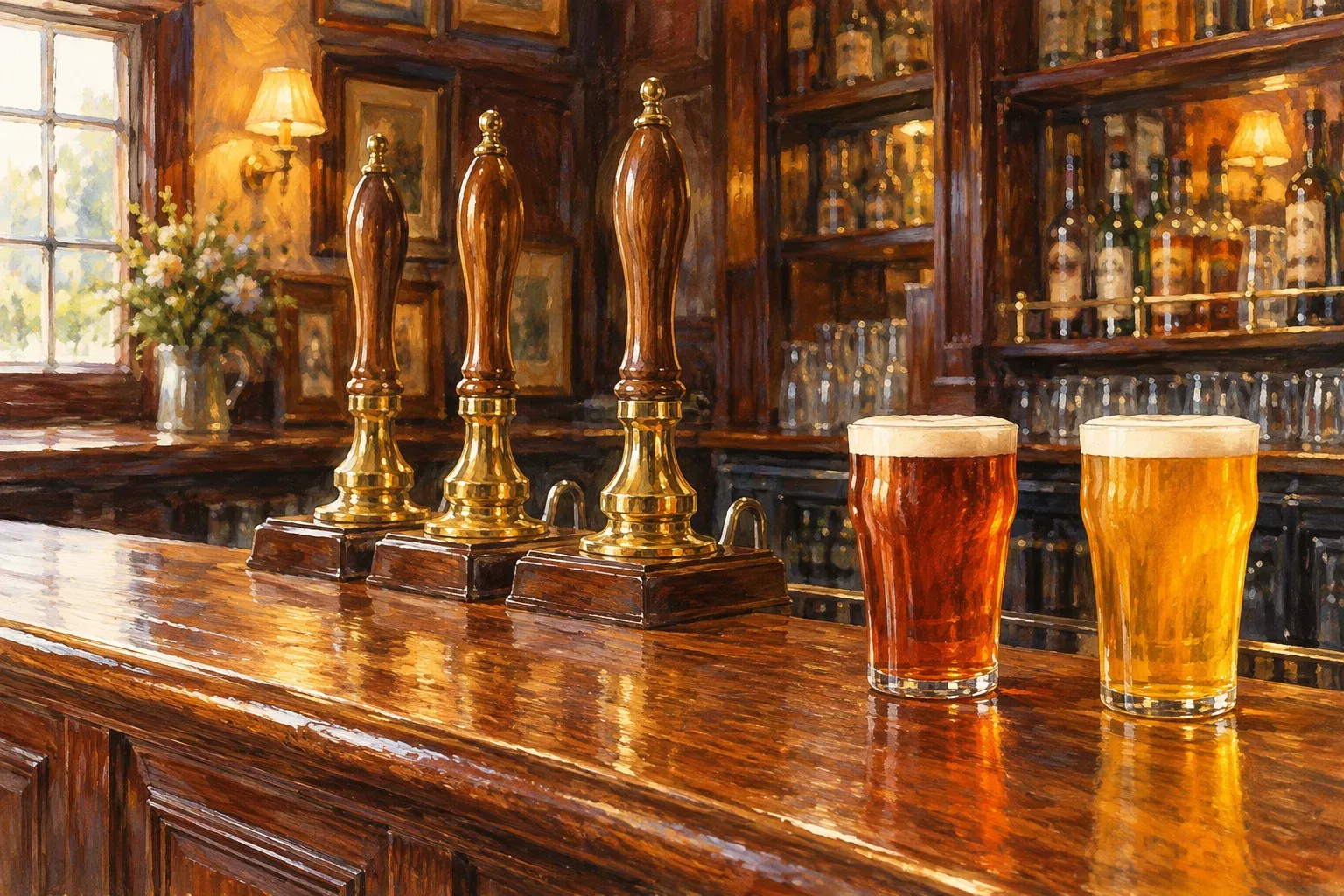
Britain gave the world India pale ale and kept cask ale, beer that finishes its fermentation in the container it is served from. In 2025 and 2026 brewing in Britain came under pressure, as closures swept through regional and craft brewers alike.
Burton and India pale ale
London brewers first shipped a pale stock ale to India in the late 1700s. After a trade dispute, the East India Company had Samuel Allsopp of Burton upon Trent recreate it in 1823 with the town’s sulphate-rich water, and the name India Pale Ale came into use around 1830. Burton’s brewers had just lost their trade to the Baltic, and Bass and Worthington followed Allsopp; by 1877 Bass was the largest brewery in the world. Burton also gave its name to a way of fermenting: the Burton Union, rows of linked oak casks that cleanse the yeast from the beer. Marston’s used it for Pedigree until January 2024, and Thornbridge, which recommissioned one of its sets, now markets the world’s only working union; its Jaipur the BJCP counts as a classic English IPA.
Real ale
By the early 1970s most British brewers had moved to filtered, pasteurised keg beer. CAMRA, the Campaign for Real Ale, founded on 16 March 1971, coined real ale for beer that finishes its fermentation in the cask it is served from and reaches the glass without added gas. Timothy Taylor calls its Landlord, a best bitter, the UK’s best-selling cask beer. A few breweries keep old ways of fermenting alive: Samuel Smith in its slate Yorkshire squares, and, since September 2026, Hogs Back with the double-drop vessels it installed for Brakspear.
The tied house and the Beer Orders
A tied pub must buy some or all of its beer from one brewer or pub company. By the late 1980s six national brewers dominated pub beer, and the Beer Orders of 1989 capped their tied estates at 2,000 pubs and required pubs to offer a guest beer. The brewers answered by spinning off pub-only companies, and the orders were revoked in 2003. Pubs still shape the brewers’ business: Fuller’s sold its brewery to Asahi in 2019 and kept its pubs and hotels.
Craft, and the shake-out
From 2009 a new wave of brewers, The Kernel, Camden Town, Beavertown and many more, brought American-style hoppy beer, cans and taprooms, while BrewDog grew on crowdfunding and publicity. The global brewers bought in: AB InBev took Camden in 2015, and Heineken took full control of Beavertown in 2022.
The trade body SIBA counted 1,578 UK breweries on 1 January 2026, a net loss of 137 in 2025, almost three a week. BrewDog went into administration and was sold to the US company Tilray in March 2026. In October 2026 Carlsberg Britvic proposed closing Marston’s Burton brewery in 2027, saying cask volumes had more than halved in under a decade.
Sources
Checked .
- 12C. English IPA, 2021 Beer Style Guidelines — Beer Judge Certification Program
- Bass Brewery — Wikipedia
- Burton Unions — Brewery History Society
- CMBC announces retirement and preservation of union sets at Marston's Brewery — Carlsberg Marston's Brewing Company
- Campaign for Real Ale — Wikipedia
- Real ale — Wikipedia
- Beer Orders — Wikipedia
- Carlsberg Britvic proposes the closure of Marston's Brewery — Carlsberg Britvic
- Brewdog sold after going into administration — BBC News
- SIBA warns of 2026 survival crisis for British beer — Society of Independent Brewers
- Hogs Back to brew Brakspear cask ales — Brewers Journal