

Canadian beer: Molson, Labatt and Moosehead, ice beer, Quebec's Belgian ales and a craft scene under pressure
Canadian beer from Molson's 1786 brewery and Labatt Blue to Unibroue, Dieu du Ciel! and Steam Whistle: provincial prohibition, the ice beer wars, cream ale and spruce beer, the craft revival and Ontario's 2024 beer-sales shake-up.
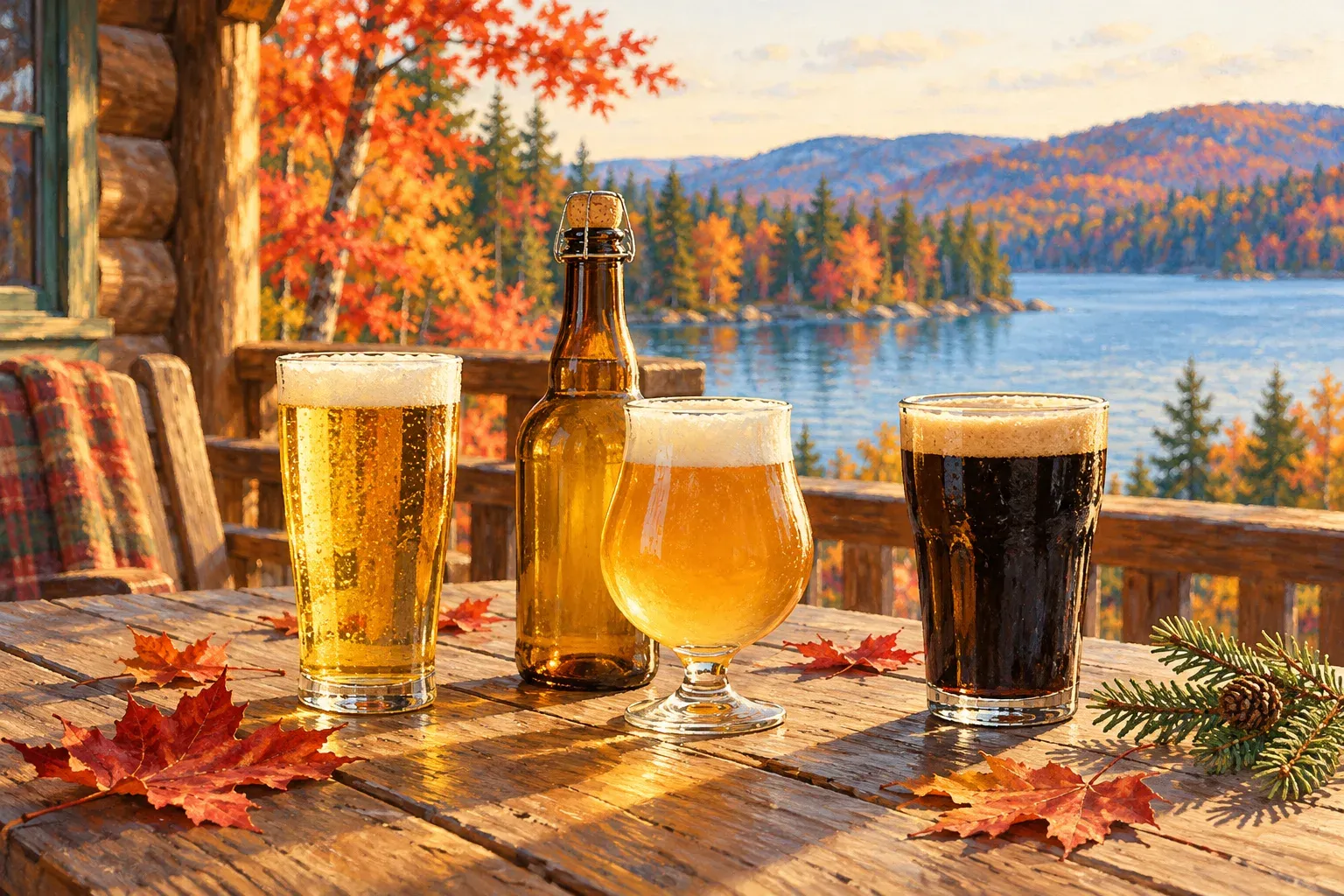
British settlers brought ale to Canada, and soldiers, entitled to six pints a day, and Loyalists from the United States built the market. The founding names came one after another: John Molson in Montreal in 1786, Alexander Keith in Halifax in 1820, Thomas Carling in 1840, John Kinder Labatt in London, Ontario, in 1847 and Susannah Oland in Nova Scotia in 1867. Molson is the oldest brewing business still running in Canada. Today the best seller by far is pale lager, which Canadians call North American lager, though in Quebec and the Maritimes golden ales such as Molson Export and Alexander Keith’s are still popular.
Prohibition and three big brewers
Canada’s prohibition was provincial and short: Ontario’s ran from 1916 to 1927, while Prince Edward Island stayed dry until 1948. Ontario brewers could still brew for export. Labatt survived on export beer and weak “temperance ales”, and the Sleeman family smuggled beer to American bootleggers and lost its licence for 50 years in 1933. After repeal, government boards ran the sale of beer, and by the 1960s three companies dominated: Canadian Breweries, later Carling O’Keefe, Molson and Labatt.
All three are now foreign-owned. Carling O’Keefe merged into Molson in 1989, Molson merged with Coors in 2005, Belgium’s Interbrew, now AB InBev, bought Labatt in 1995, and Sapporo bought Sleeman in 2006. Moosehead, founded by Susannah Oland and still run by her family, became the largest Canadian-owned brewer. In 2023 Carlsberg bought Waterloo Brewing, which had been the largest Canadian-owned brewer in Ontario.
Ice beer, cream ale and spruce beer
In April 1993 Molson launched Canadian Ice, which it called North America’s first ice beer; Labatt, which held patents on its own chilling process, answered that August, and the two fought the “ice beer wars”. The cream ale, an ale brewed in the 1800s to compete with the lagers of Canada and the American north-east, survives in Sleeman Cream Ale, the BJCP’s Canadian example. Spruce beer is older than both: First Nations along the St Lawrence brewed it, the settlers of New France drank it against scurvy, and it lasted in Quebec until the 1960s. Today it is mostly a soft drink, though a few brewers, among them Garrison in Halifax, still make the alcoholic version.
The craft revival
Horseshoe Bay in West Vancouver, opened in June 1982, is counted as Canada’s first modern microbrewery, and Granville Island, Big Rock, Brick and McAuslan followed in the 1980s. Quebec went its own way: its brewers took up Belgian styles, from Unibroue’s La Fin du Monde, a tripel, to the beers of Dieu du Ciel!, which in 2012 had more of Canada’s top-rated beers on BeerAdvocate than any other brewery. Canada had about 1,165 breweries in 2022.
The count has fallen since: by 3.4% in 2024 and 2.9% in 2025, as beer sales slipped about 2% a year. Quebec’s brewing companies fell in number in 2025 for the first time in nearly fifteen years. Some well-known breweries changed hands in trouble: Central City, now Homefield, was sold out of creditor protection in 2025, and Pit Caribou of the Gaspé settled with its creditors the same year. Steam Whistle of Toronto bought Beau’s in 2022.
In Ontario, the Beer Store, owned by the big brewers and once holding about 90% of the province’s beer sales, lost its hold in 2024: the province ended its contract early, and from 5 September 2024 beer went on sale in thousands of convenience stores. The Beer Store closed 120 shops by November 2025.
Sources
Checked .
- Beer in Canada — Wikipedia
- Beer in Quebec — Wikipedia
- Ice beer — Wikipedia
- The Beer Store — Wikipedia
- 1C. Cream Ale, 2021 Beer Style Guidelines — Beer Judge Certification Program
- Carlsberg completes acquisition of Waterloo Brewing in Canada — Carlsberg Group
- Craft beer in Canada is losing its fizz, as sales dry up and more breweries go bust — CBC News
- Les microbrasseries dégrisent — L'actualité
- Statistiques Québec — Association des microbrasseries du Québec