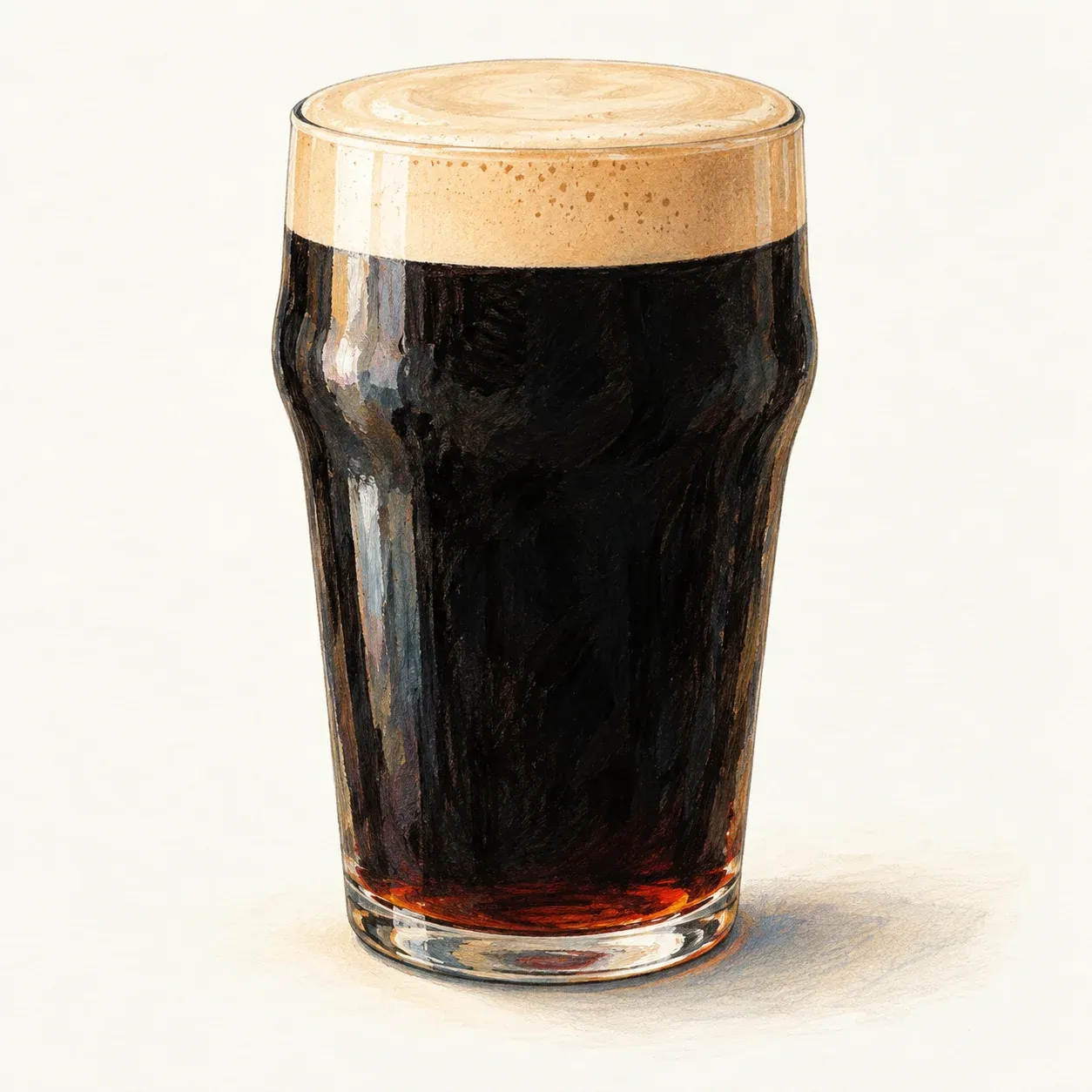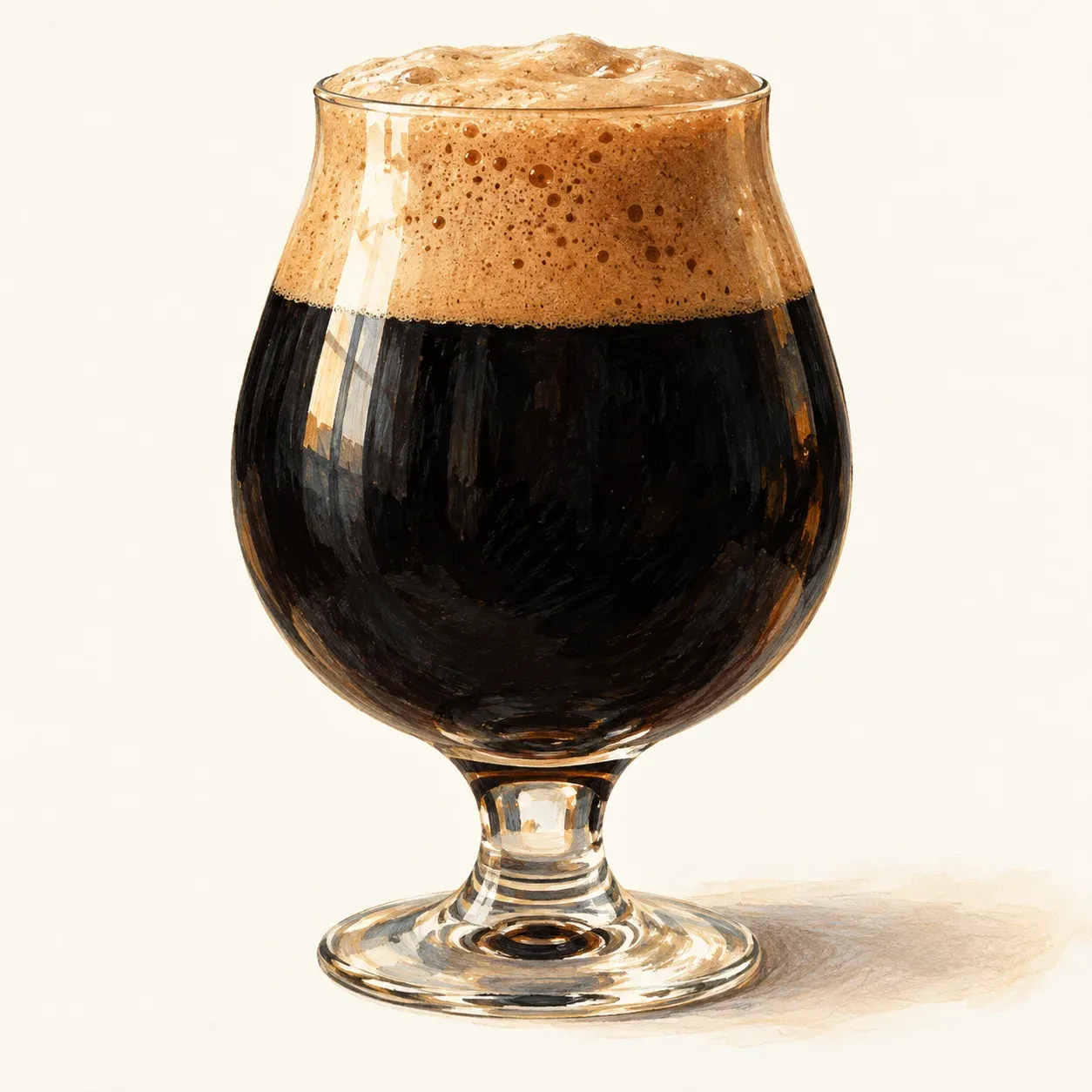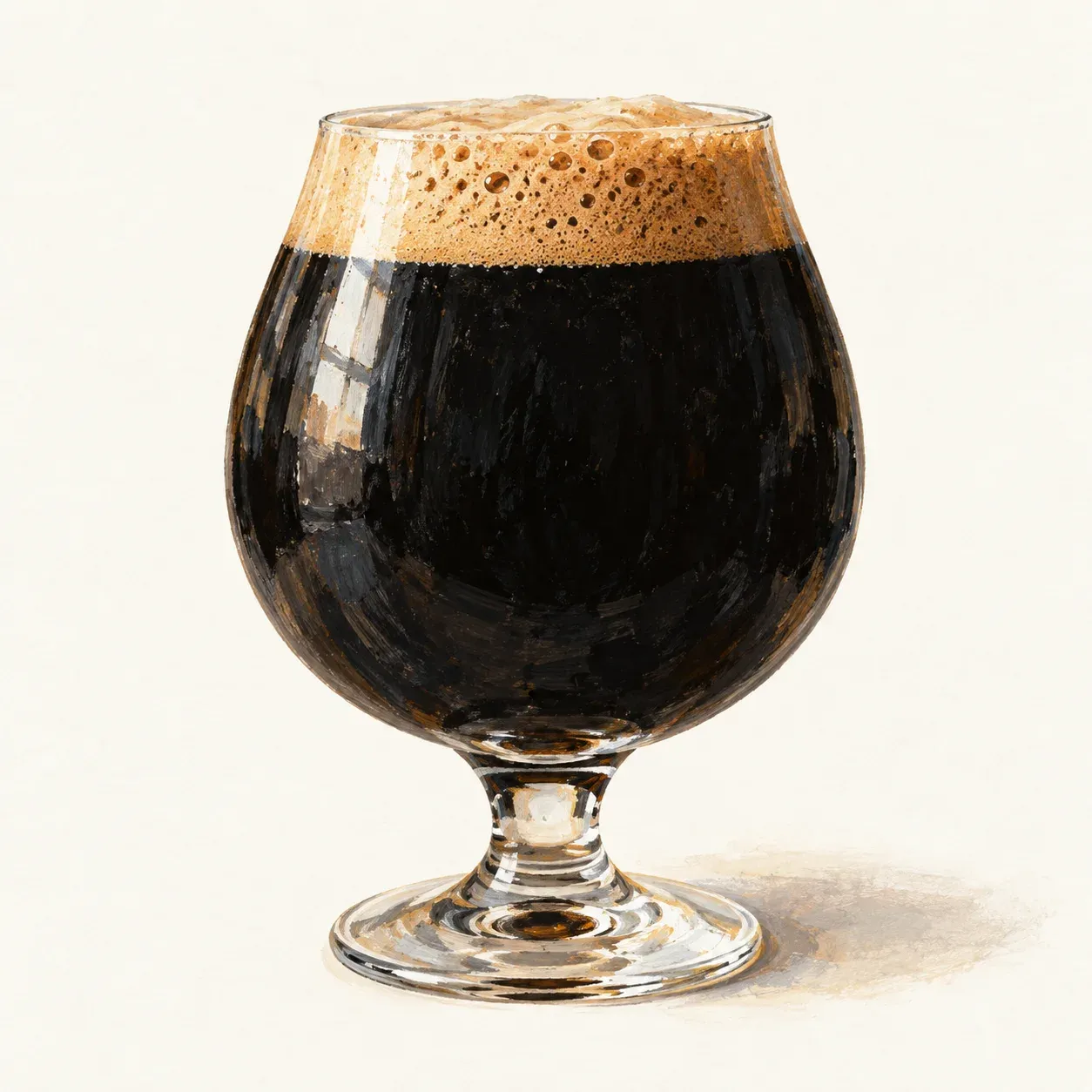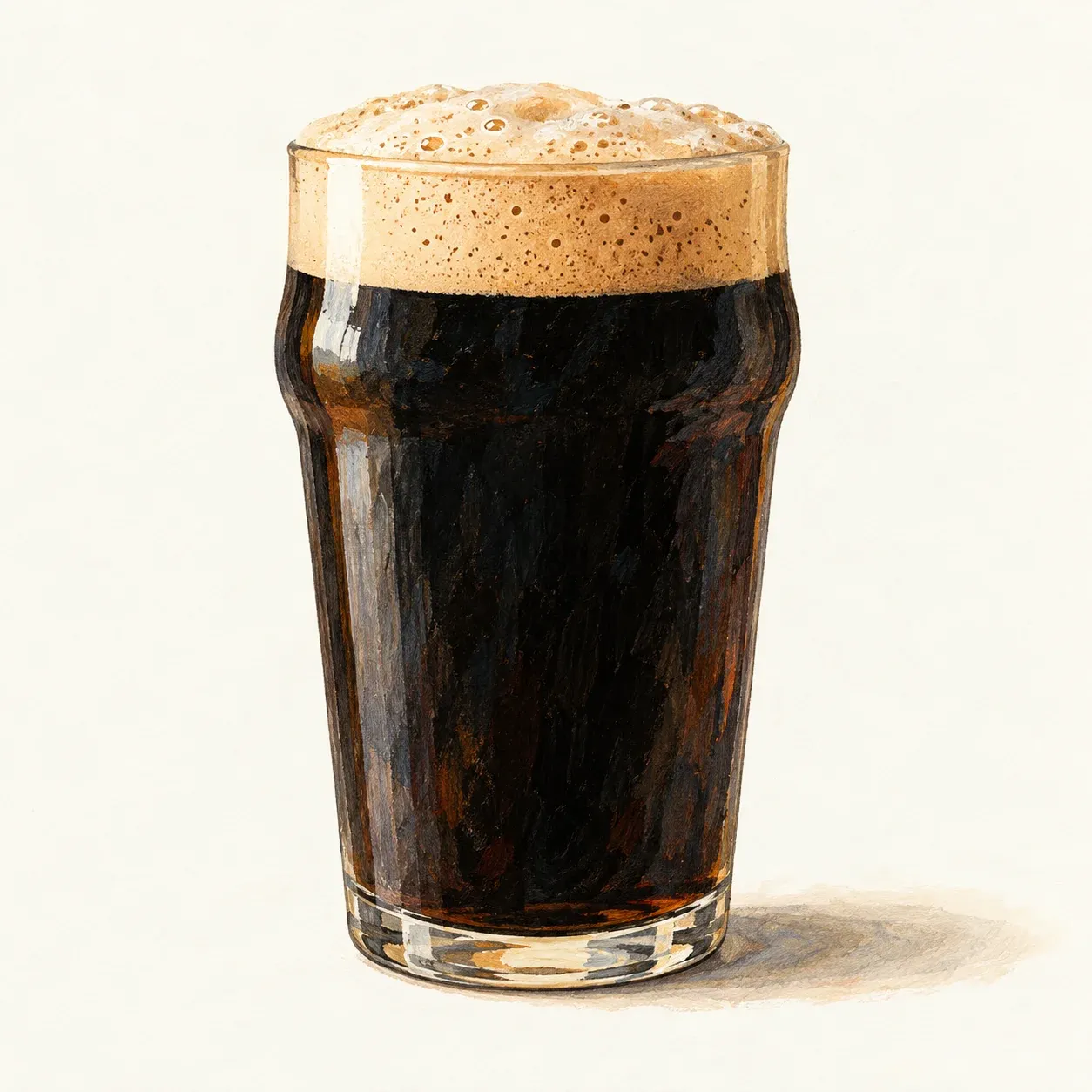
A foreign extra stout pours very deep brown to black under a large tan to brown head. It tastes of strong roast, coffee, dark chocolate or lightly burnt grain, without a sharp bite, with a medium to high bitterness and a fairly dry finish. At 6.3–8% alcohol it is stronger than an everyday stout.
Where it comes from
Brewers have shipped strong, heavily hopped stouts abroad since the 18th and 19th centuries. Guinness says it first brewed its Foreign Extra Stout, then called West India Porter, in 1801, with extra hops to keep it in hot weather. Guinness stopped ageing it in vats in the 1950s. In the Caribbean, brewers adapted the export stouts into a sweeter local style, the tropical stout.
Next to its neighbours
It has the balance of an Irish extra stout with more alcohol, and is smaller and less intense than an imperial stout. It lacks the strong bitterness and late hops of an American stout, and is drier and more bitter than a tropical stout of the same gravity.
Foreign Extra Stout in numbers
- Classic examples
- Guinness, Carib Brewery, Belize Brewing Company (Belikin), Commonwealth Brewery (Kalik), Dama Bier, Cervecería Berlina, Cervecería Cuello Negro
- Original gravity
- 1.056–1.075
- Final gravity
- 1.010–1.018
- Also called
- Export stout
- Classic examples
- Guinness Foreign Extra Stout; Coopers Best Extra Stout; The Kernel Export Stout London 1890
- BJCP style
- 16D Foreign Extra Stout
Sources
Checked .
- 16D. Foreign Extra Stout, 2021 Beer Style Guidelines — Beer Judge Certification Program