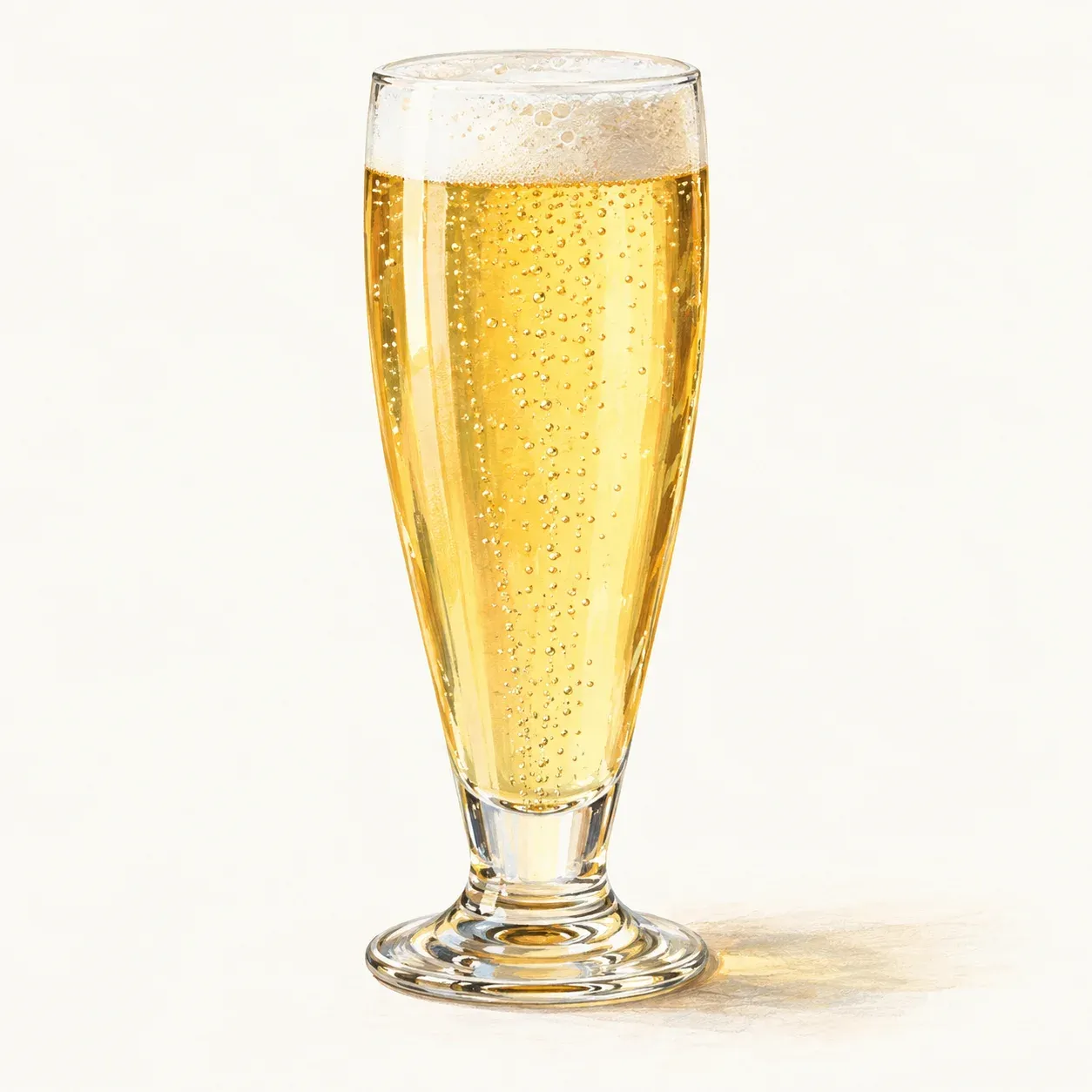
American Lager
American lager: the very pale, crisp, lightly bitter lager of Budweiser, Coors and Miller, served ice cold. Strength, taste, history and how it differs from a Pilsner.
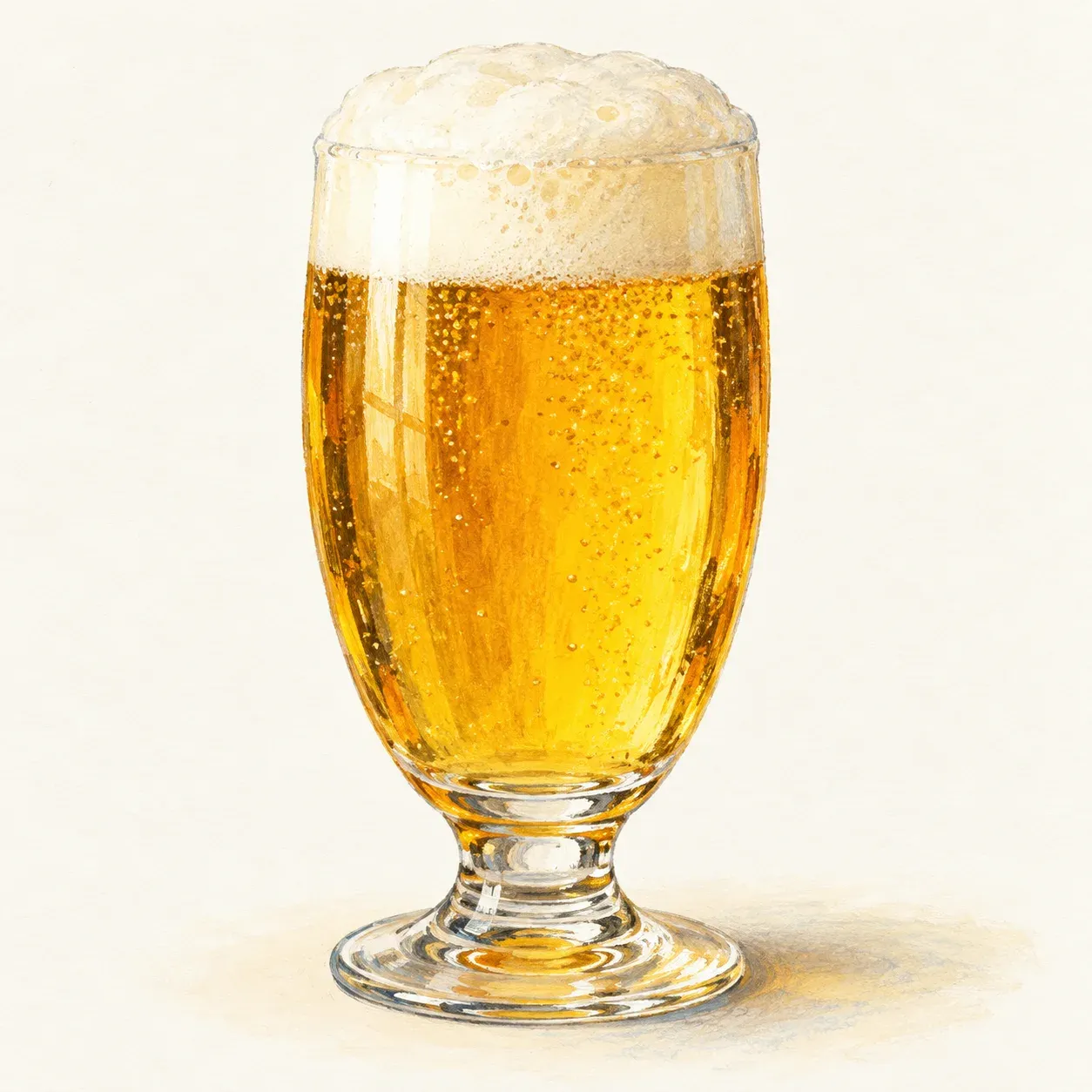
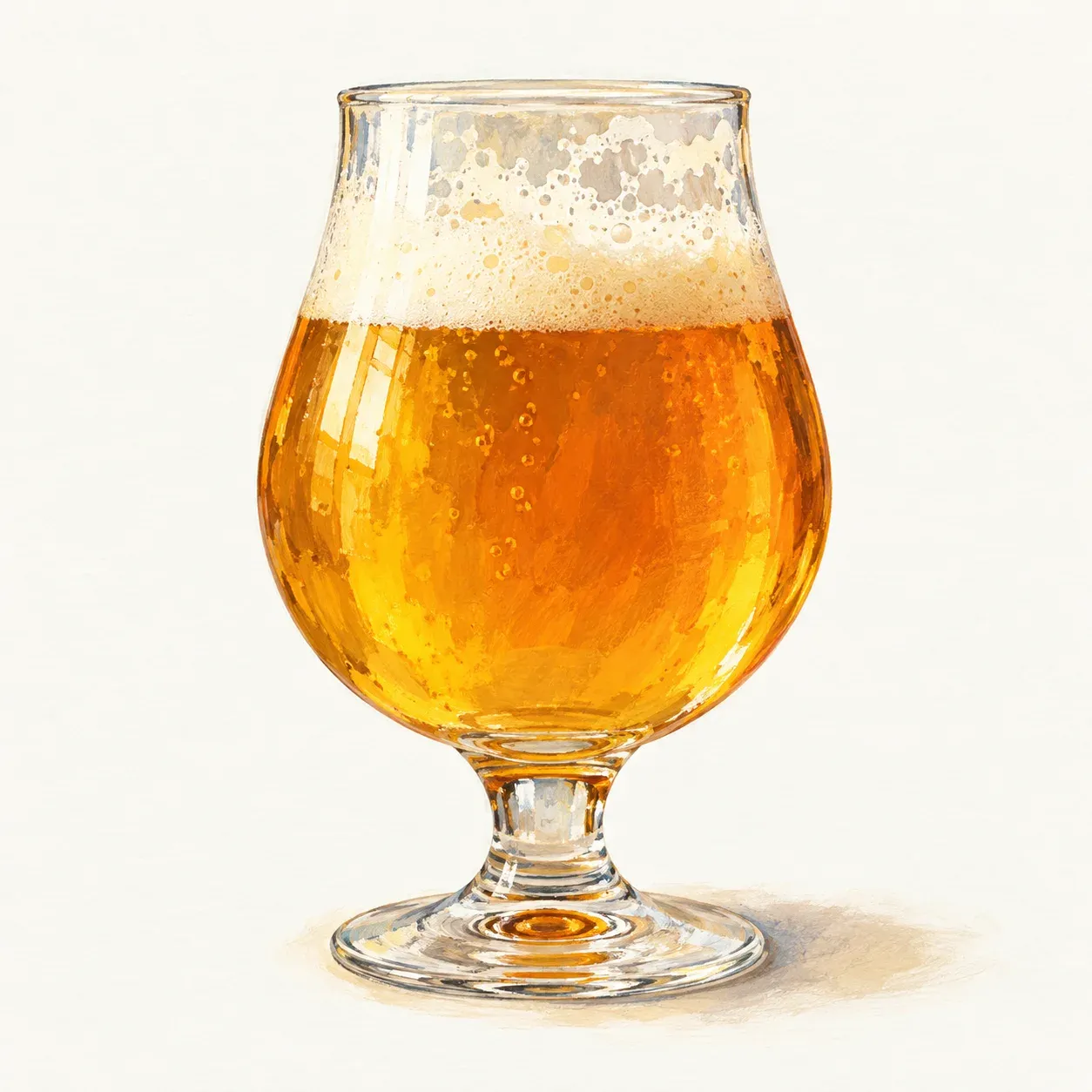
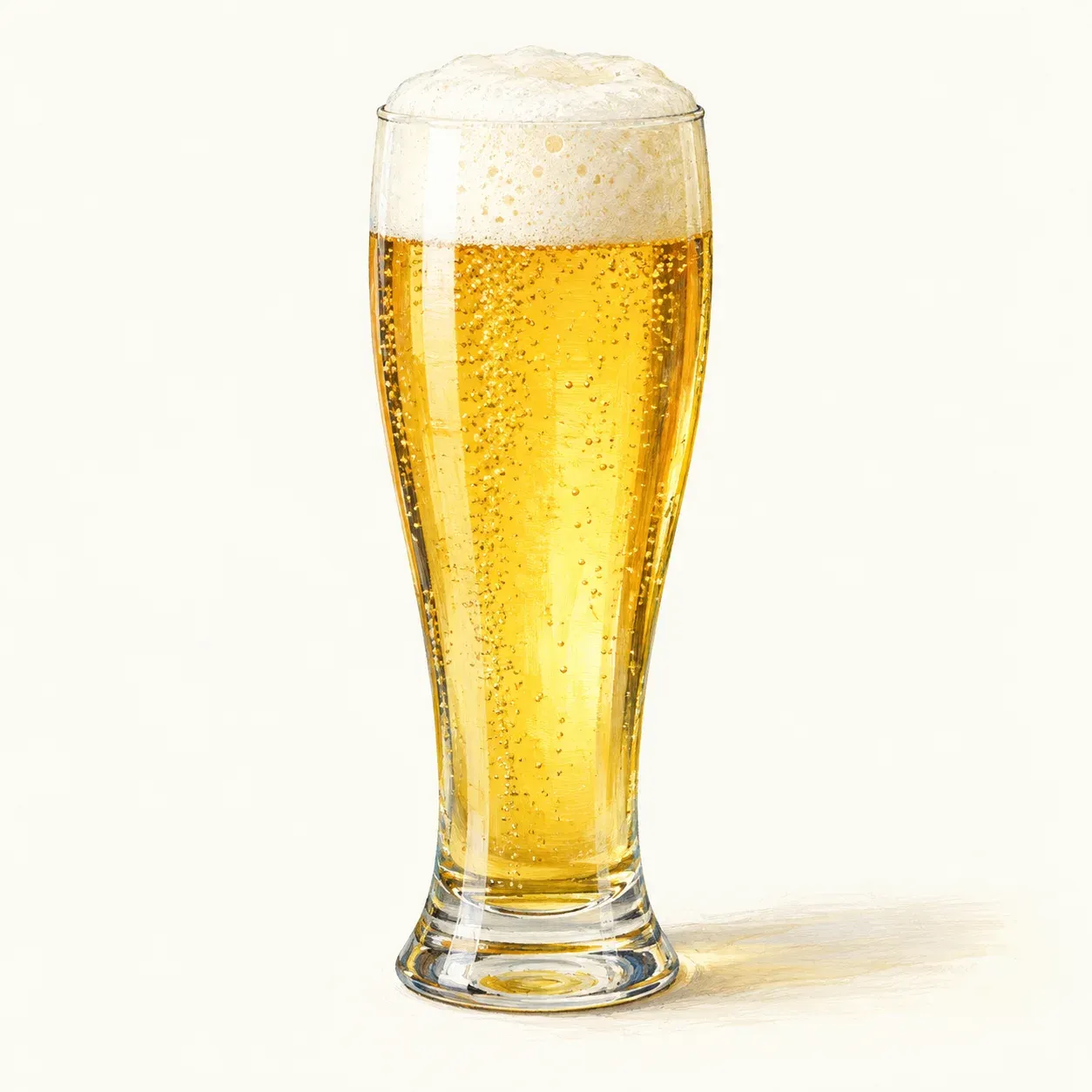
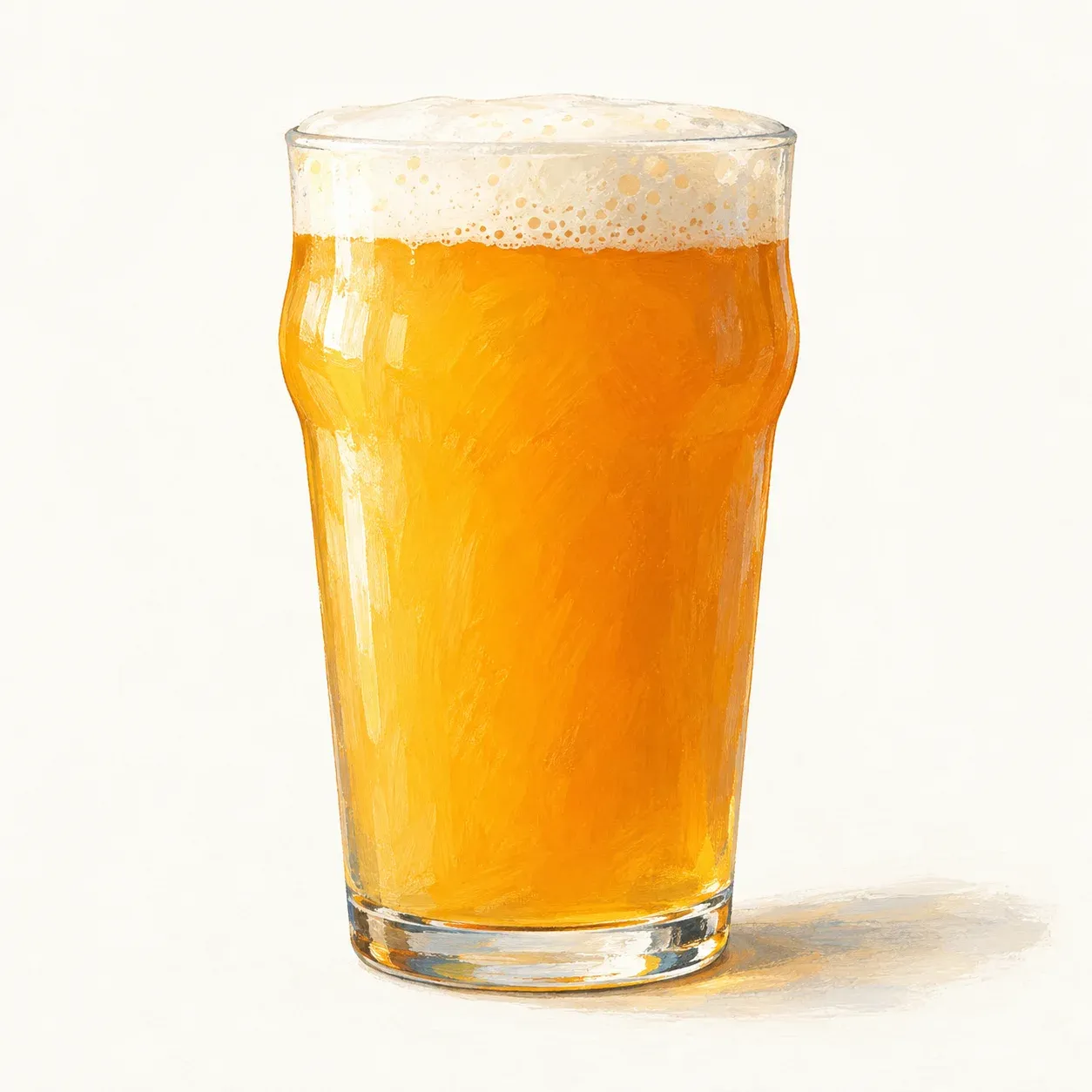
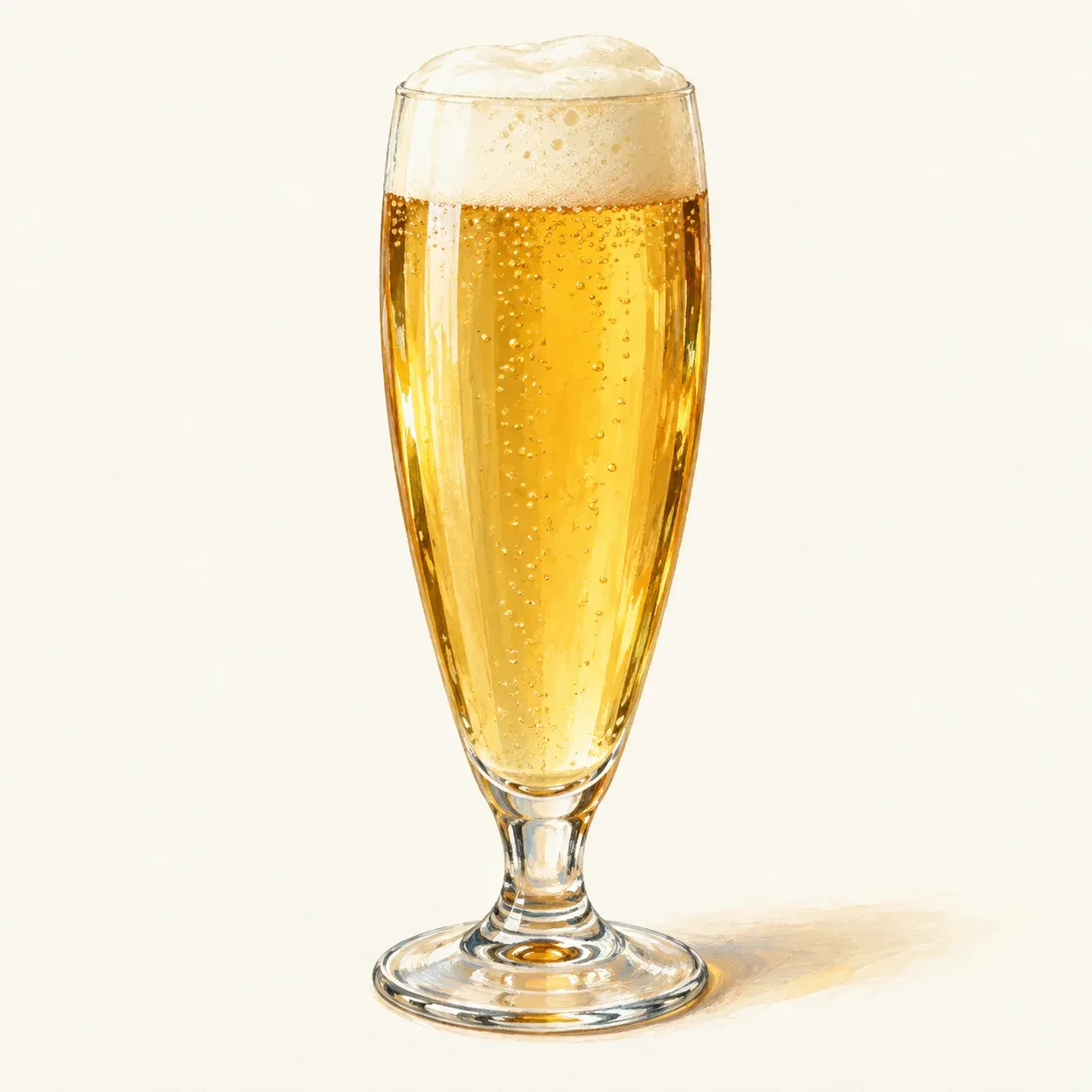
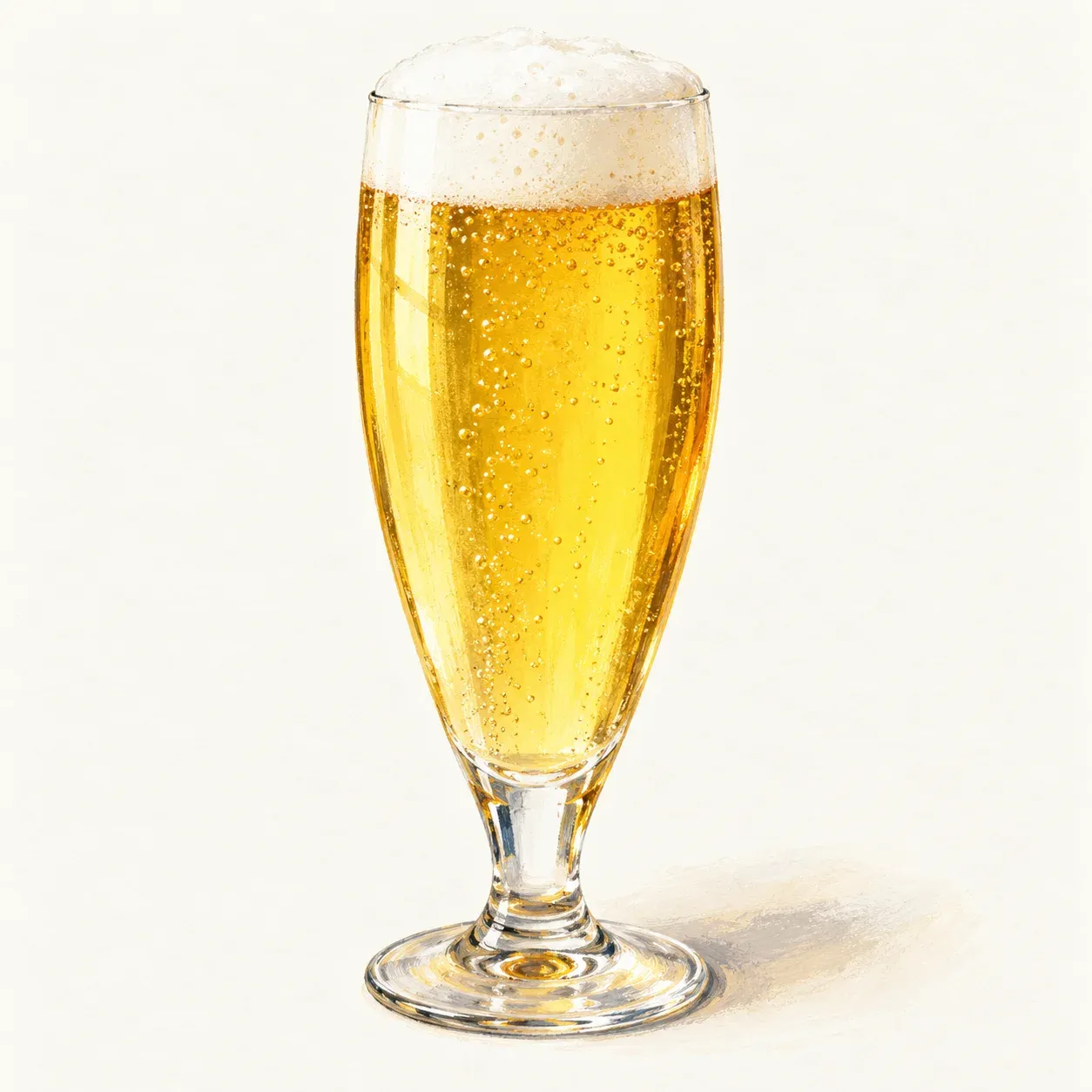
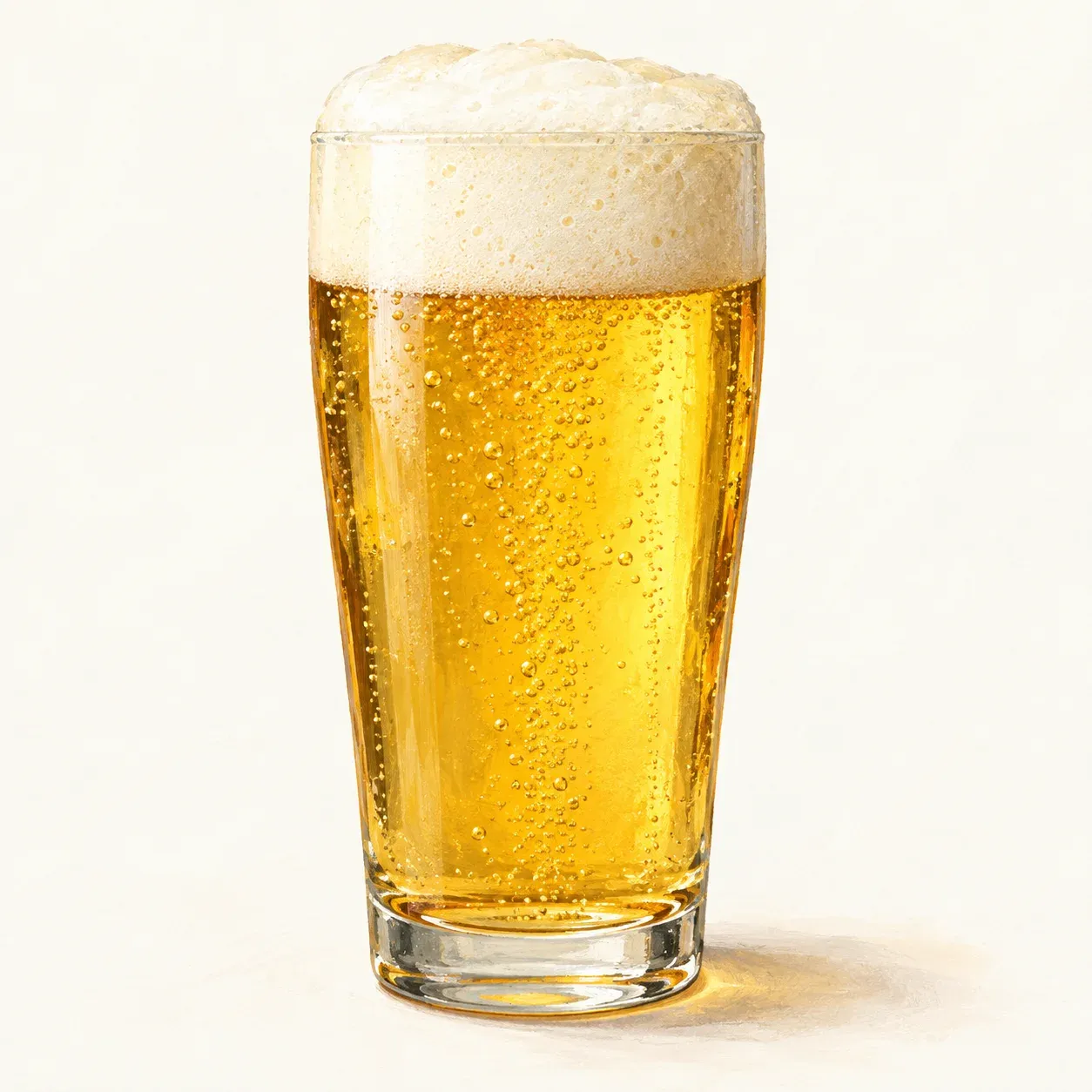
An American lager pours very pale straw to medium yellow and very clear, with a white, frothy head that soon falls. It tastes neutral: a little grain or corn, which can read as sweetness because the bitterness is so low, and a crisp, dry finish lifted by high carbonation. It is light in body, at 4.2–5.3% alcohol, and made to be drunk very cold.
Where it comes from
It grew out of the stronger, hoppier pre-Prohibition lager after Prohibition and the Second World War. The breweries that survived merged, sold their beer across the whole country and advertised one easy style to everyone. It led the American market for decades, and brewers abroad copied it for their own mass markets. Budweiser from Anheuser-Busch, Coors Original and Miller High Life from Molson Coors and Pabst Blue Ribbon are the BJCP’s examples.
How to serve it
Pour it at 4–7 °C into a flute. It goes with pho, washed-rind cheeses or kettle corn.
Next to its neighbours
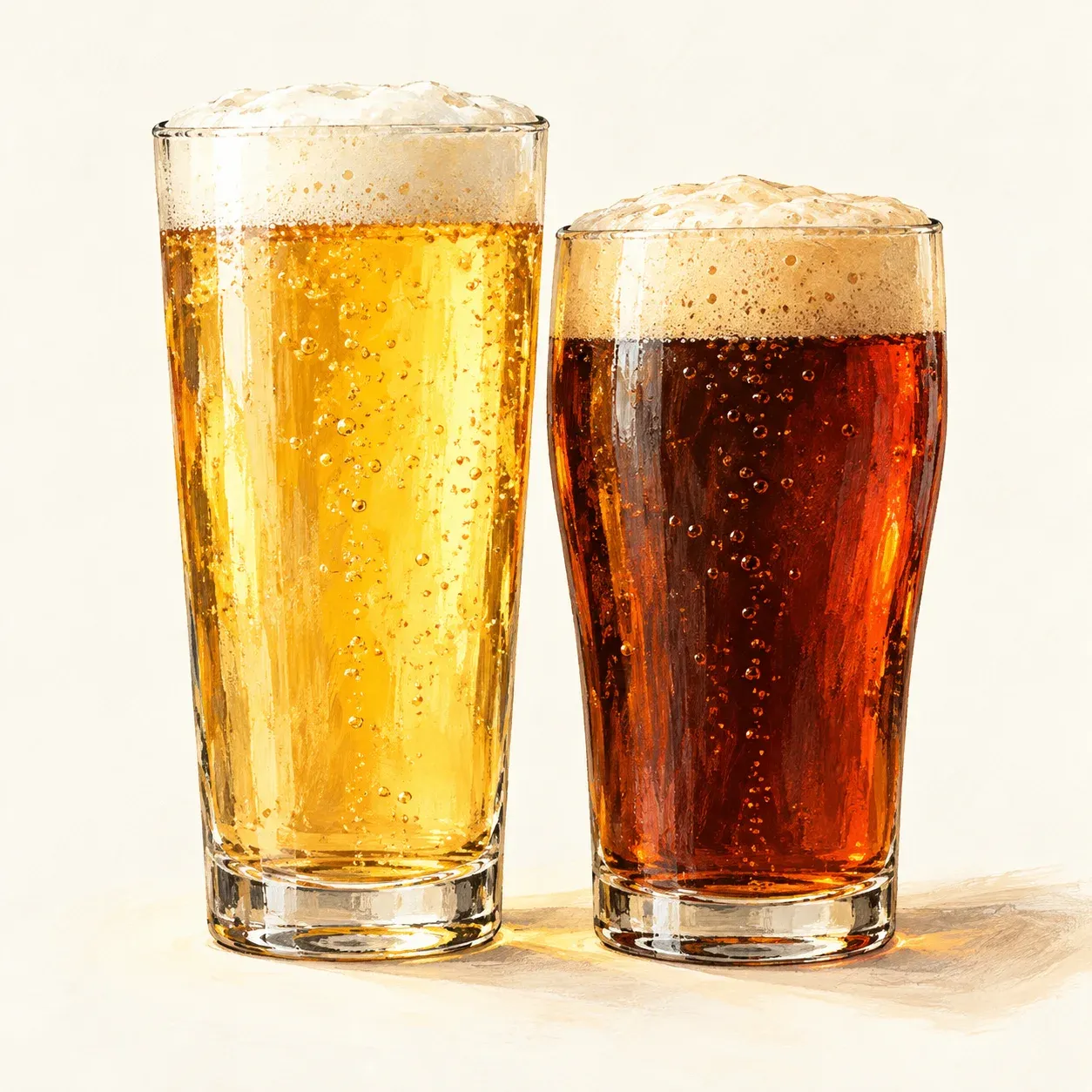
It has more body and flavour than a light lager, but less bitterness and flavour than an international pale lager, and far less hop than a German Pils or a Czech Pilsner. A cream ale tastes much the same with a little more character.
American Lager in numbers
- Classic examples
- Cervejaria Big Jack, Anheuser-Busch, Molson Coors, Pabst Brewing Company
- Original gravity
- 1.040–1.050
- Final gravity
- 1.004–1.010
- Food
- Pho; washed-rind cheeses; kettle corn
- Classic examples
- Budweiser; Coors Original; Miller High Life; Pabst Blue Ribbon; Old Style; Grain Belt Premium
- BJCP style
- 1B American Lager
Sources
Checked .
- 1B. American Lager, 2021 Beer Style Guidelines — Beer Judge Certification Program
- American Lager — CraftBeer.com, Brewers Association