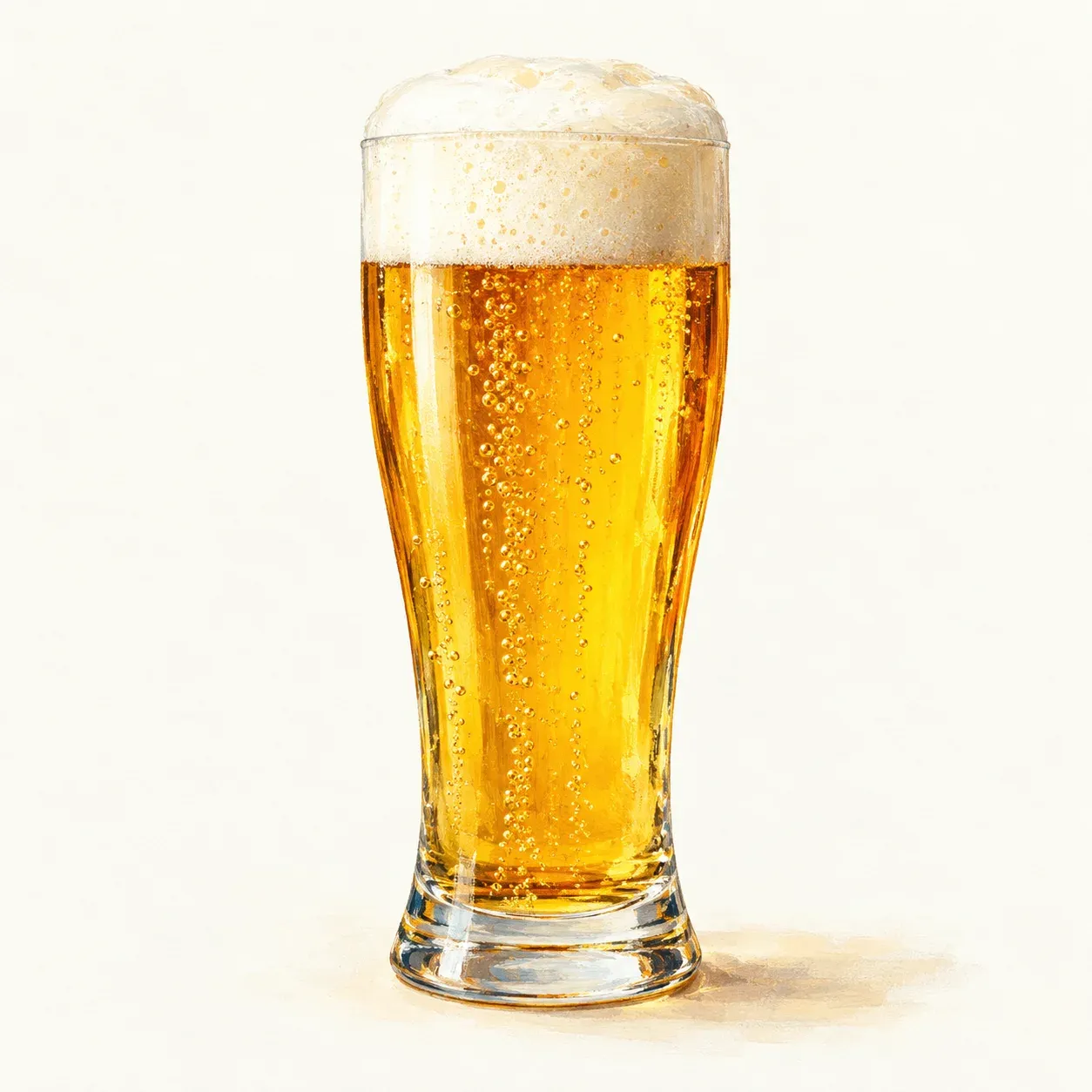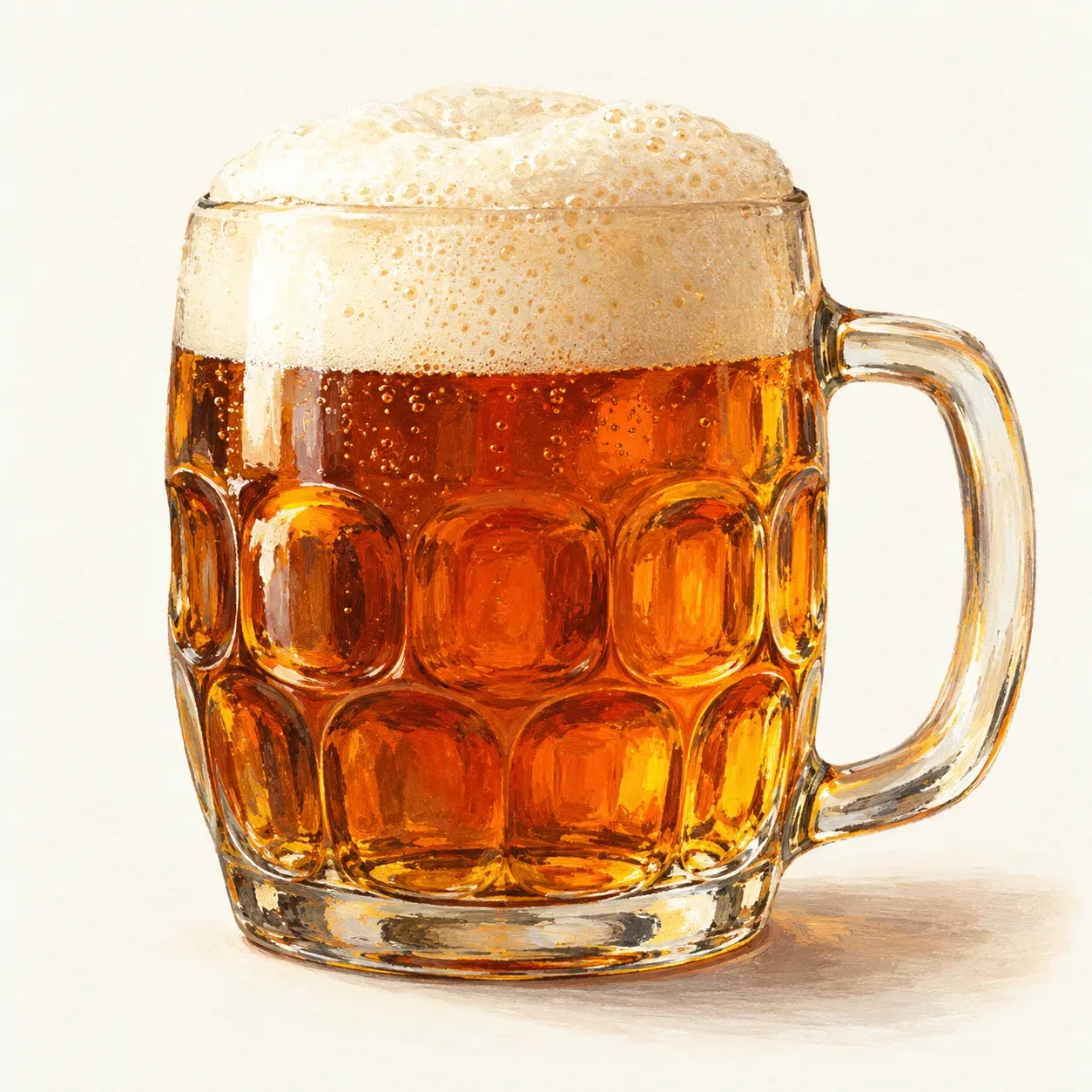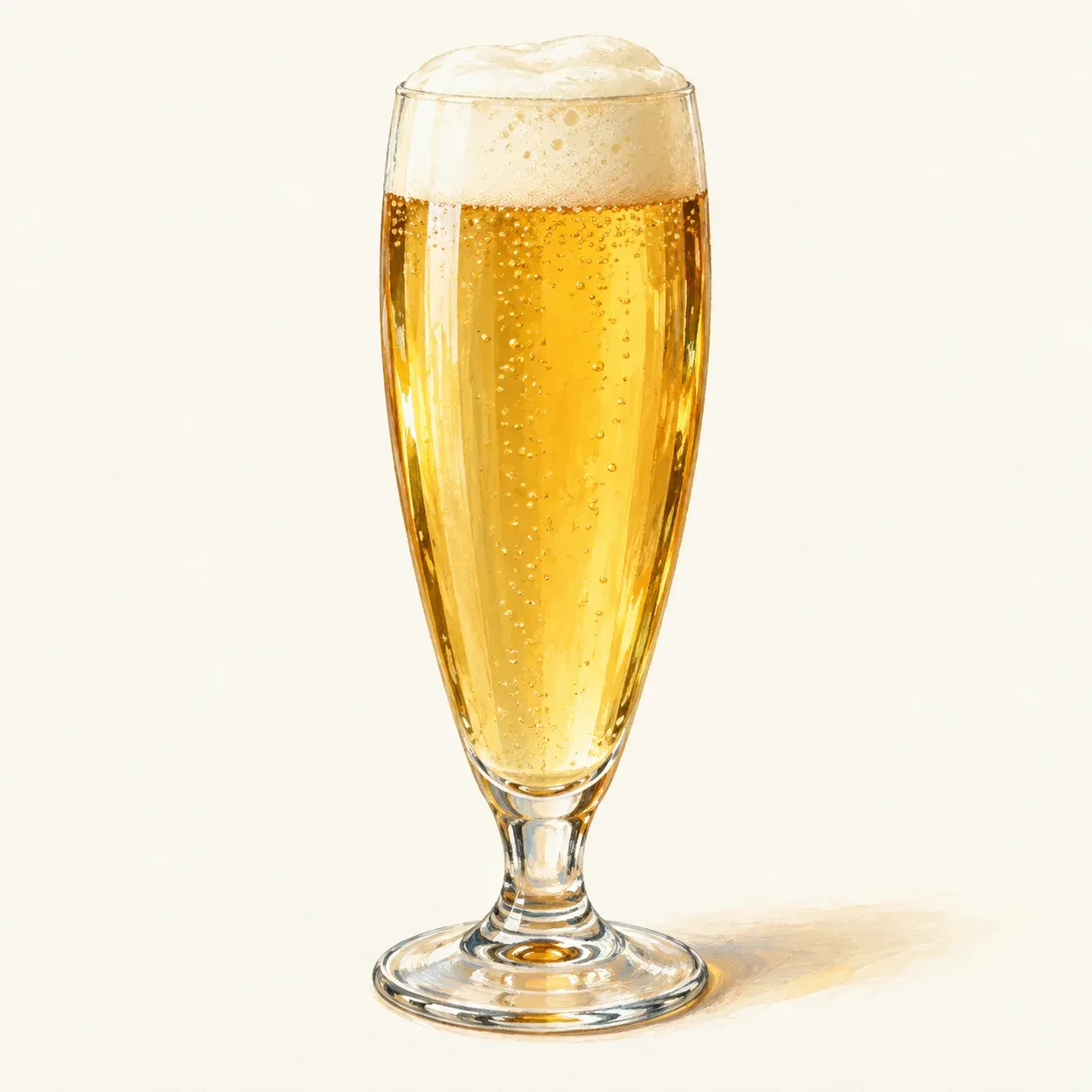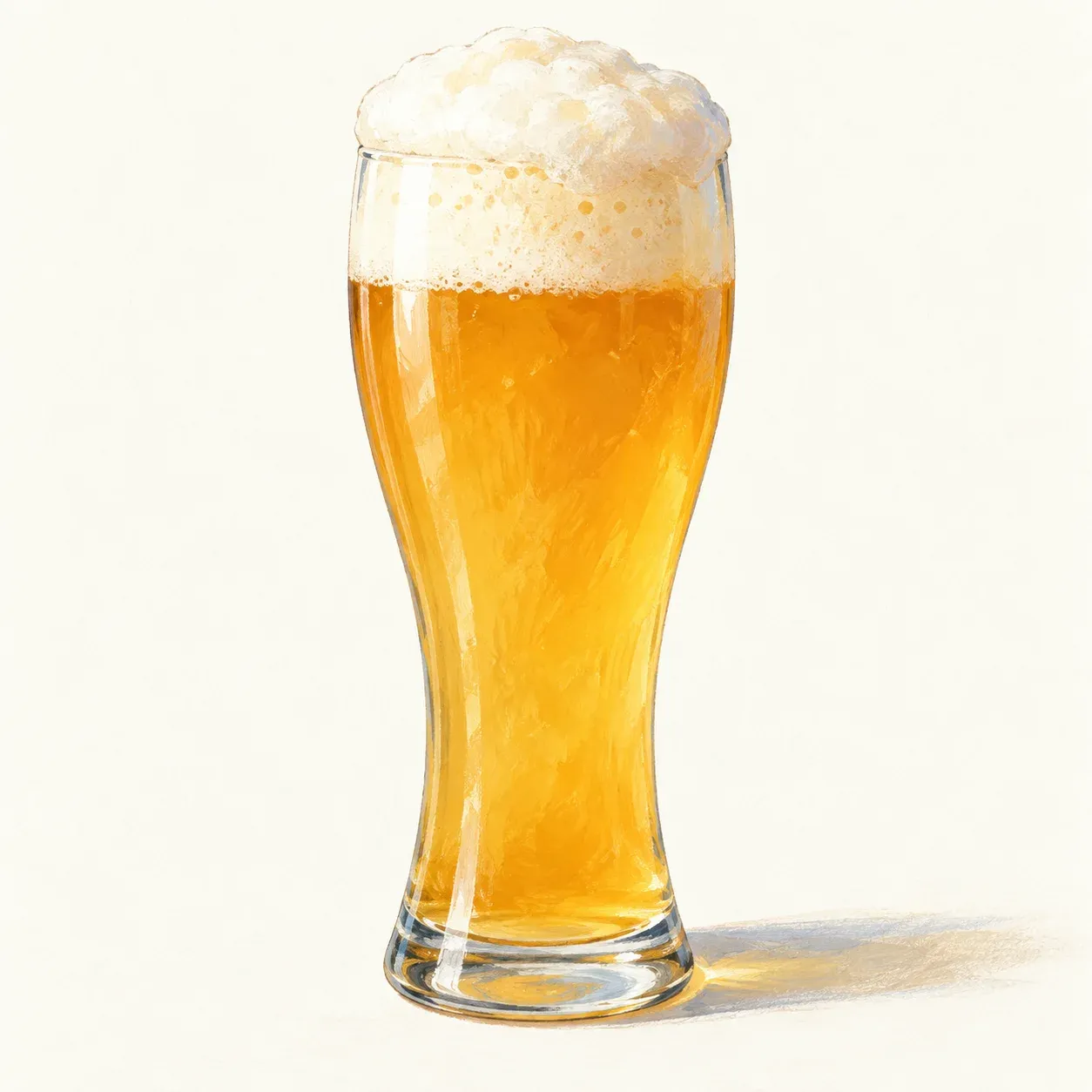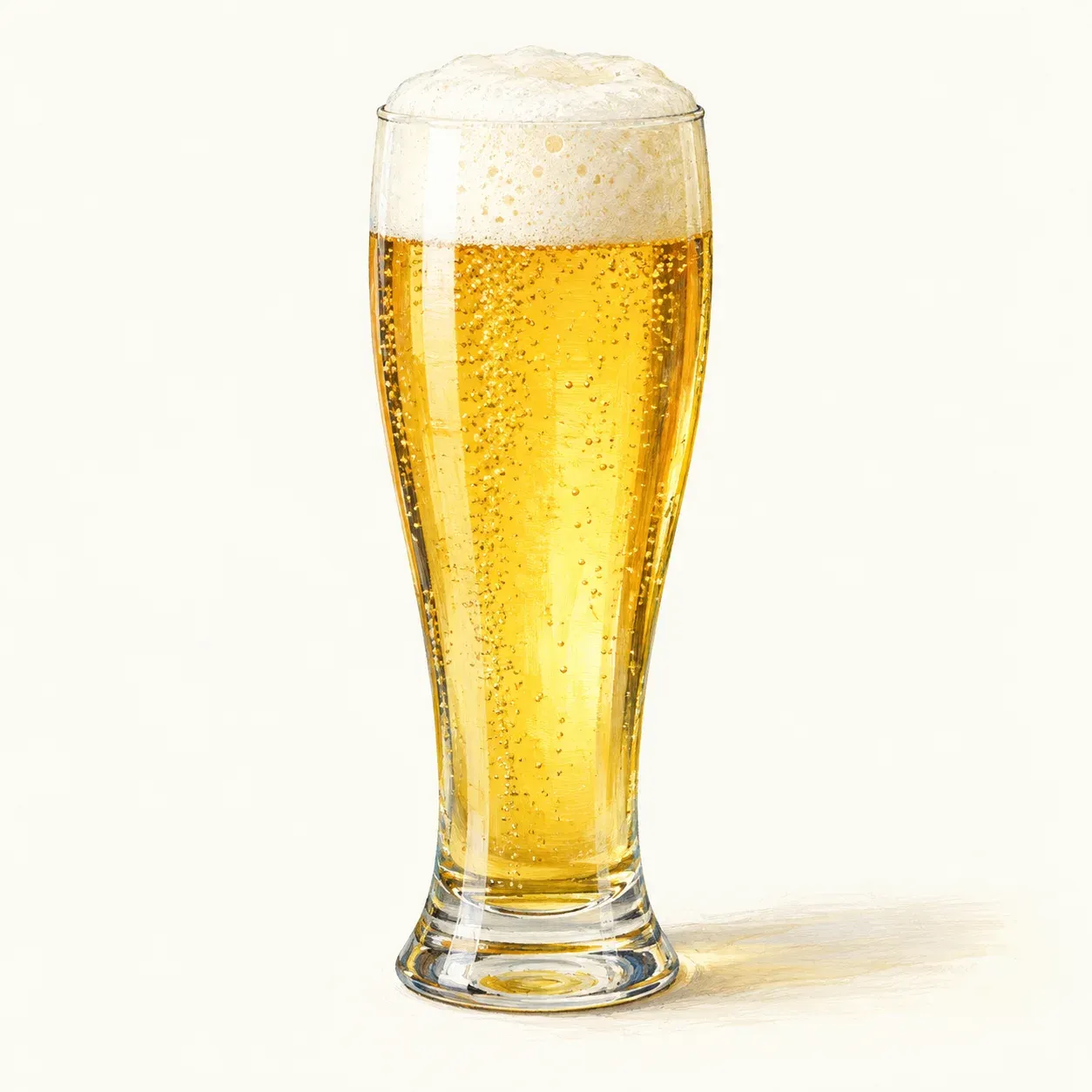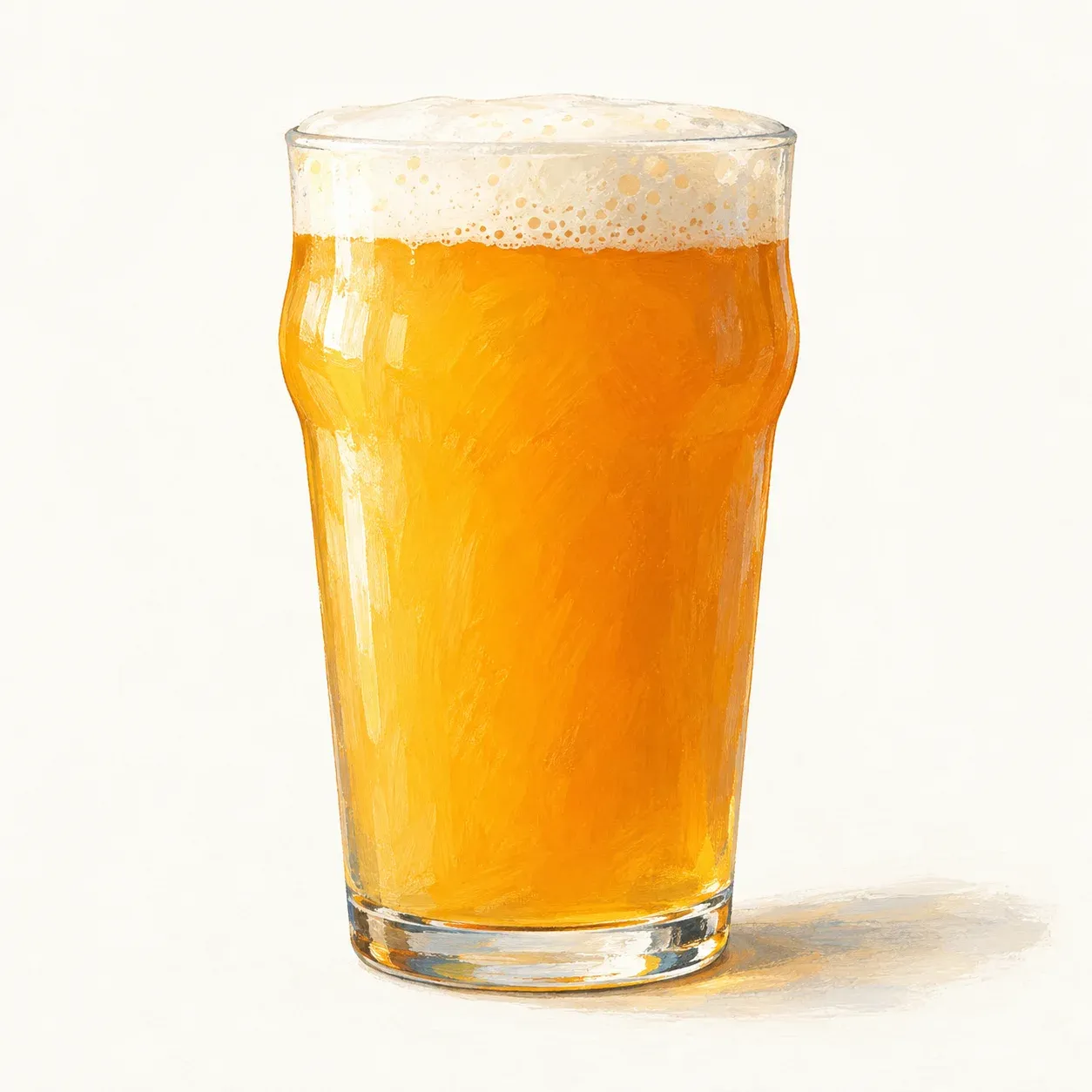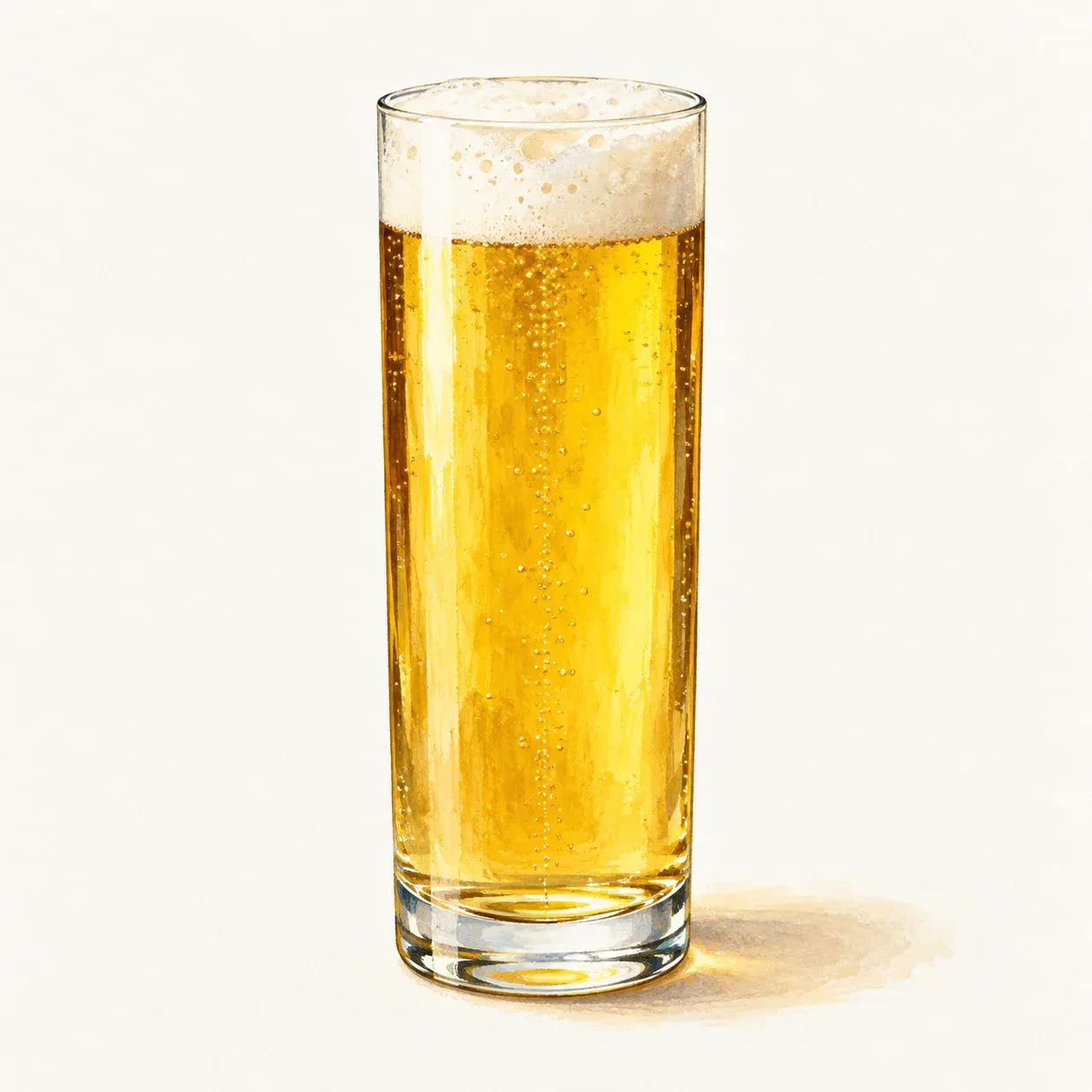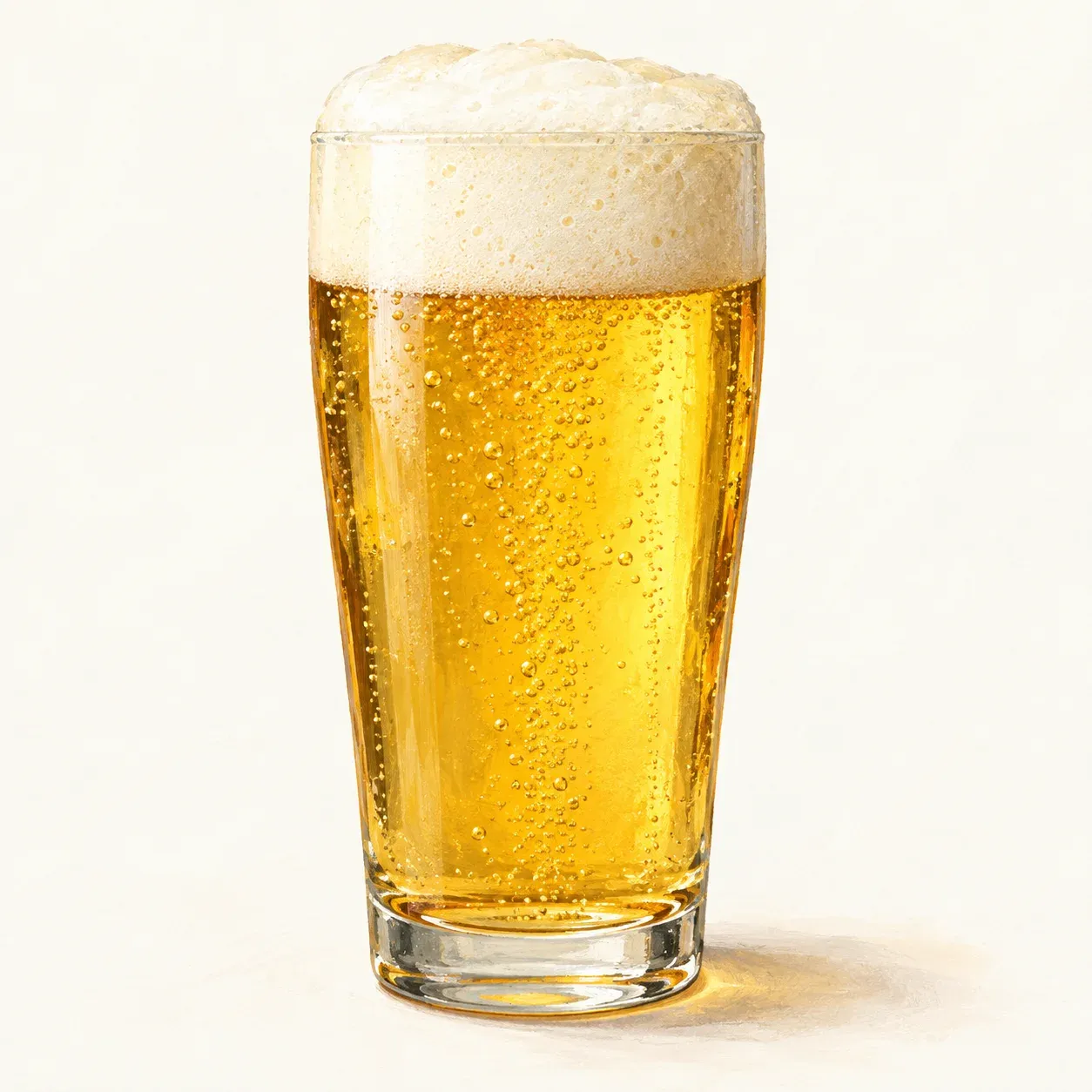
In a Czech pub, výčepní is the lighter pale beer and ležák the stronger one. A výčepní pours light yellow to deep gold and very clear, under a creamy head that lasts. It tastes like the stronger Czech pilsner: bready malt, a spicy or herbal hop flavour, a firm bitterness that never turns harsh. Only the body and the alcohol shrink, to 3–4.1%.
Where it comes from
Josef Groll brewed two pale beers in Plzeň in 1842 and 1843, a výčepní and a ležák, and made twice as much of the smaller one. The beer writer Evan Rail suggests they were 10° and 12° beers, measured in degrees Plato, though the výčepní may have been weaker. Today the BJCP calls it the most consumed type of beer in the Czech Republic.
Brewers use Czech Pilsner malt, Czech hops and Czech lager yeast, with soft water low in sulphate and carbonate. The soft water lets them hop hard and still get a round, gentle bitterness.
Next to its neighbours
It is the lighter, everyday version of the Czech pilsner: less body, less alcohol, the same balance of bread and hops. Únětice and Bernard both brew one, sold as a 10.
Czech Pale Lager in numbers
- Classic examples
- Bernard, Primátor, Únětický pivovar, Litovel
- Original gravity
- 1.028–1.044
- Final gravity
- 1.008–1.014
- Czech name
- světlé výčepní pivo
- Classic examples
- Bernard světlé pivo 10; Březňák Světlé výčepní pivo; Primátor Antonín světlé výčepní; Radegast Rázna 10; Únětické pivo 10°
- BJCP style
- 3A Czech Pale Lager
Sources
Checked .
- 3A. Czech Pale Lager, 2021 Beer Style Guidelines — Beer Judge Certification Program