Kölsch
Kölsch: a pale, delicate, top-fermented beer from Cologne, matured cold like a lager and served in a 20 cl Stange. Strength, bitterness, glass and classic examples.
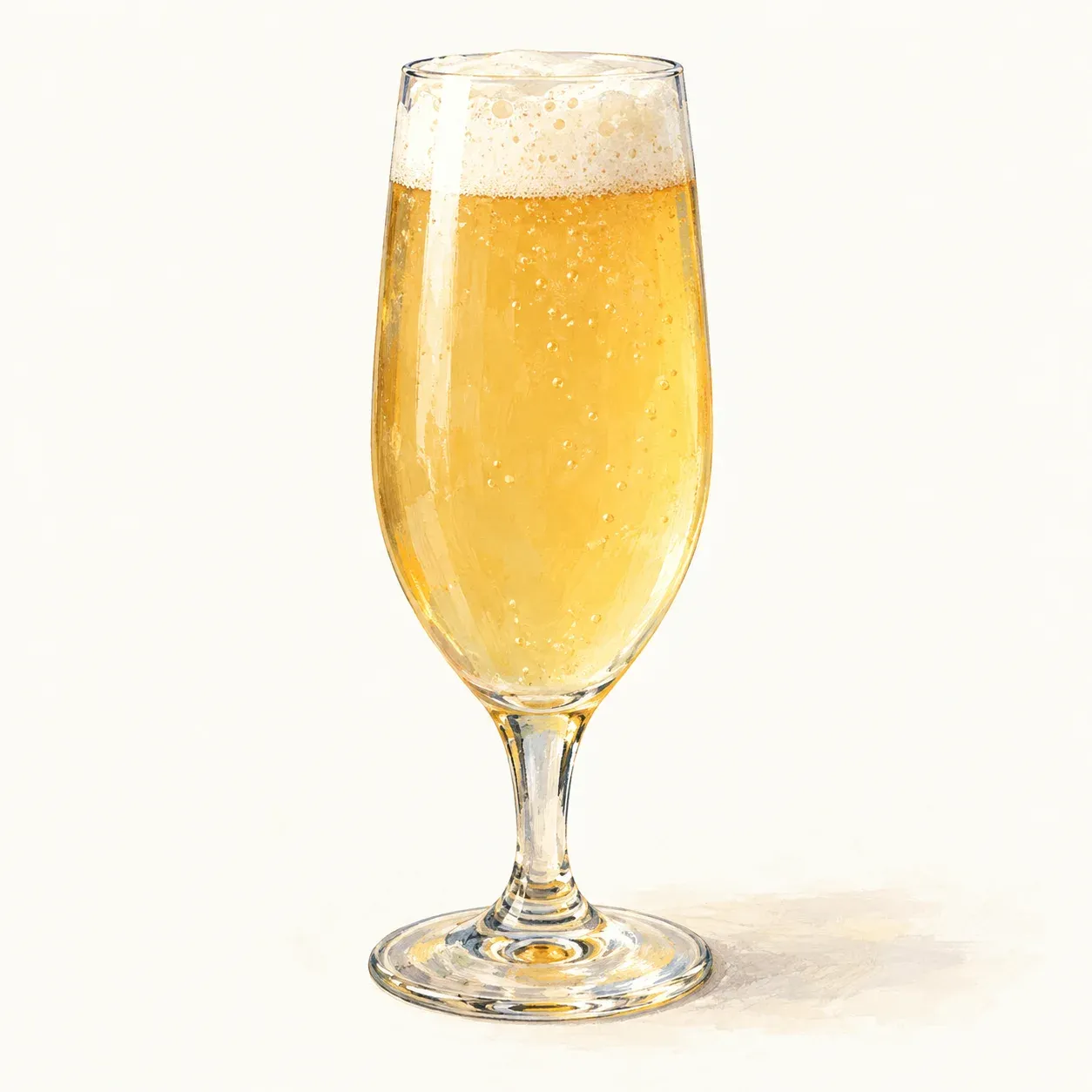
Kölsch looks like a pale lager: medium yellow to light gold and brilliant clear, with a delicate white head. Taste it and you find a soft balance, nothing loud. A little grainy malt, a faint fruitiness from the yeast, a moderate bitterness and some flowery hop, then a soft, dry finish. It tastes best fresh, because that delicate balance fades fast.
Where it comes from
Cologne (Köln) has brewed top-fermented beer since the Middle Ages, and the city once banned bottom fermentation. Kölsch itself arrived in the late 1800s, as the city’s answer to pale lager. Brewers ferment it with ale yeast at about 15 °C, then condition it near freezing for up to a month, as a lager brewer would.
Since 1986 the Kölsch Konvention has protected the name: only breweries in and around Cologne may use it. The Konvention defines it as a light, well-fermented, hop-accented, clear, top-fermented Vollbier.
How to serve it
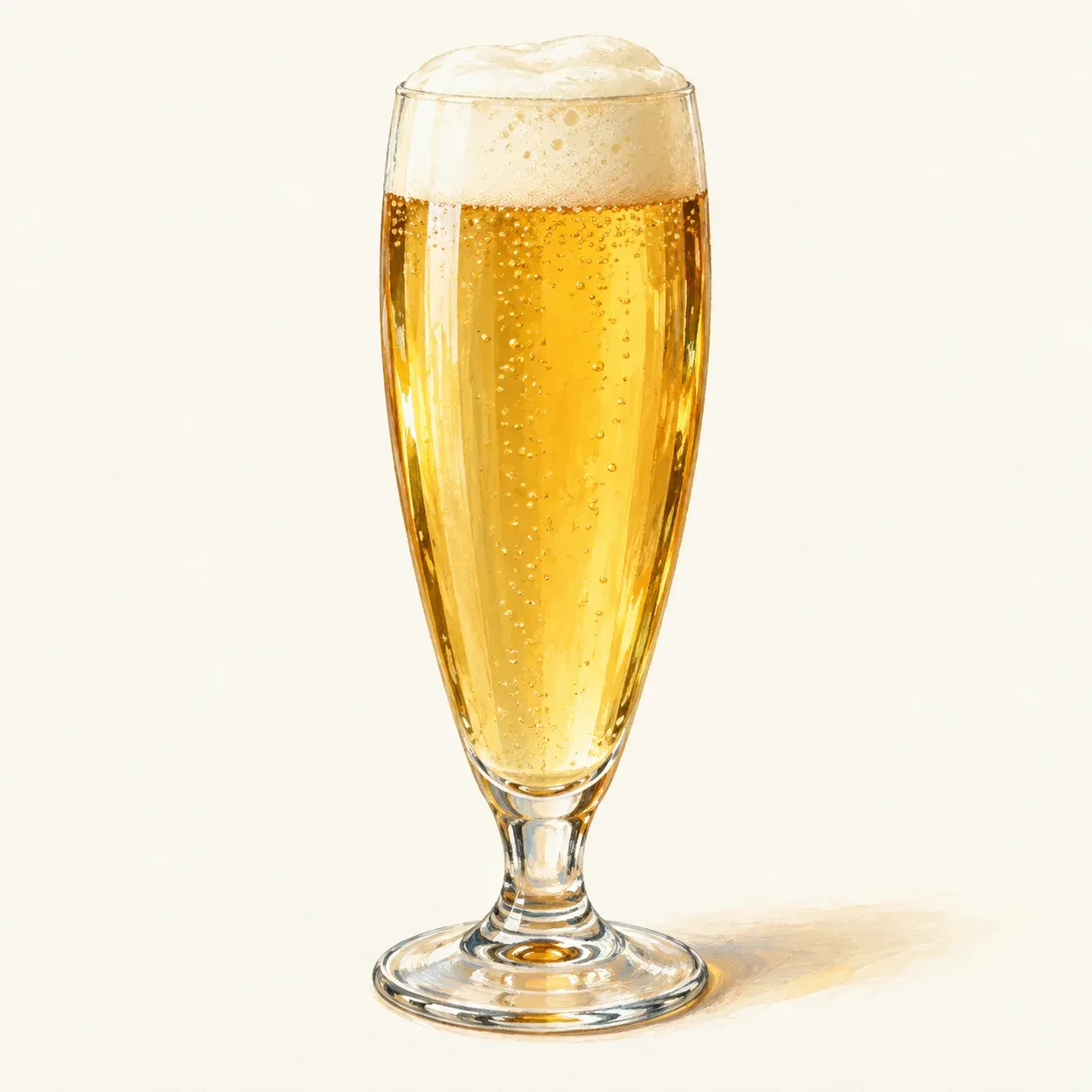
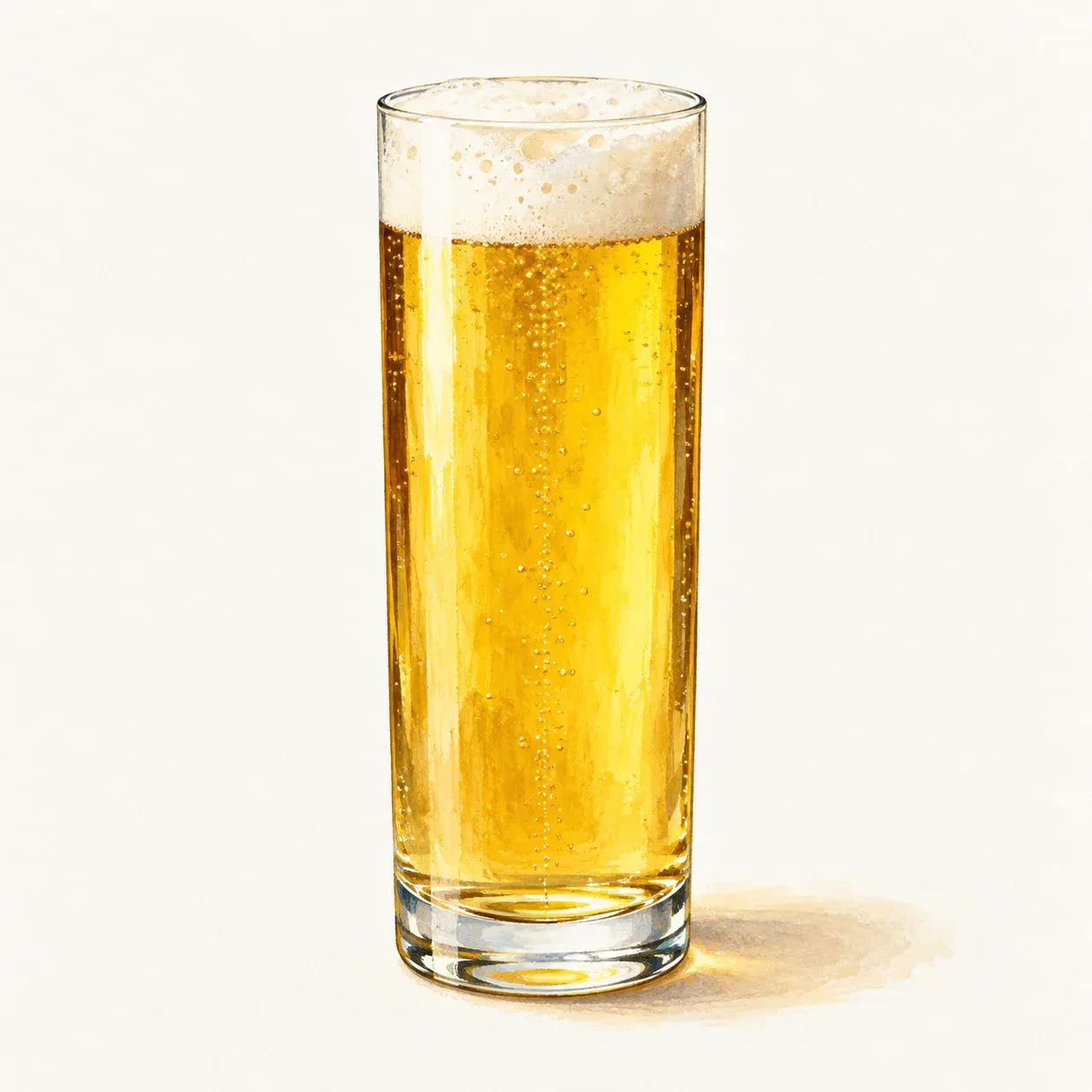
Cologne serves it in a Stange, a tall, narrow 20 cl glass. Pour it at 4–7 °C. It goes with bratwurst and nutty cheeses.
Next to its neighbours
People mistake it for a soft German Pils or an American cream ale. A Kölsch has less hop bite than a Pils, and its yeast adds a faint fruit that lager lacks. Altbier, from Düsseldorf up the Rhine, follows the same method and comes out darker and more bitter.
Kölsch in numbers
- Original gravity
- 1.044–1.050
- Final gravity
- 1.007–1.011
- Protected name
- Kölsch Konvention, 1986: breweries in and around Cologne only
- Food
- Bratwurst; nutty cheeses; light apricot cake
- Classic examples
- Früh Kölsch; Gaffel Kölsch; Päffgen Kölsch; Reissdorf Kölsch; Sion Kölsch; Sünner Kölsch; Mühlen Kölsch
- BJCP style
- 5B Kölsch
Sources
Checked .
- 5B. Kölsch, 2021 Beer Style Guidelines — Beer Judge Certification Program
- German-Style Kolsch — CraftBeer.com, Brewers Association