Lambic: the beer Brussels leaves to the air
Lambic: how brewers around Brussels let wild microbes ferment their beer, how blenders make gueuze, and the fight that won 'Oude Geuze' EU protection in 1997.
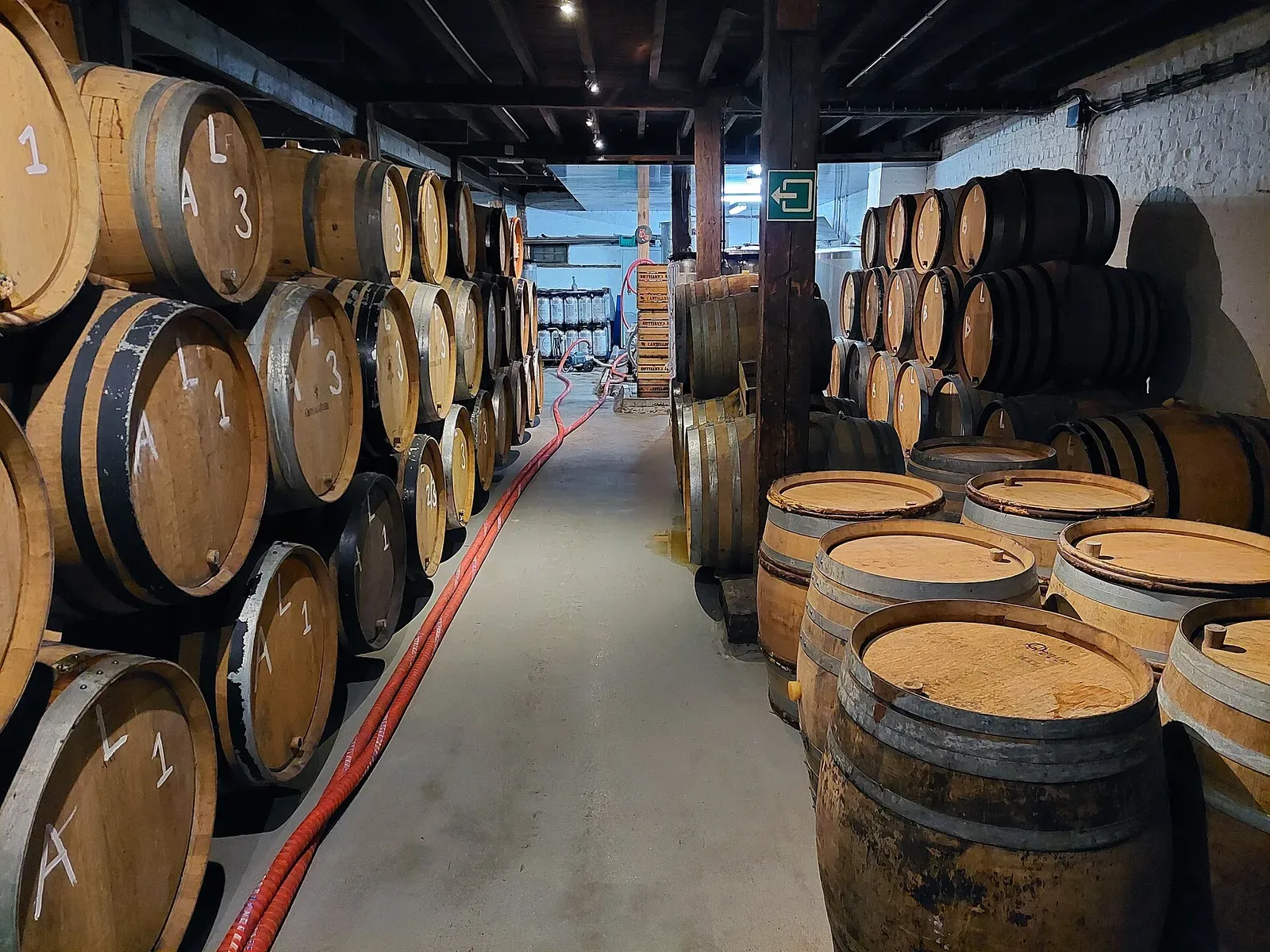
Lambic brewers around Brussels add no yeast. They boil their wort, let it cool, and leave the fermentation to the wild yeasts and bacteria in the air of the brewery. The EU’s own definition of the beer says so: spontaneous fermentation “occurs during the cooling of boiled wort under the influence of microorganisms present in the air”.
A farmhouse beer from the Zenne valley
Lambic comes from the Pajottenland and the Zenne (Senne) valley, in and around Brussels, where farmhouse brewers have made it for centuries. Brewers mash Pilsner malt with unmalted wheat, at least 30% of the grist, and boil it with old hops, aged three years or more, which protect the beer without making it bitter. After the wild fermentation starts, the beer goes into old oak barrels for months or years. Young lambic tastes sharply sour; after a year or more the wild Brettanomyces yeast adds the earthy, leathery notes drinkers call funk.
Blenders and their beers
On its own, lambic is still and flat, served young from the cask in Brussels cafés. Blending turns it into something else. A gueuze blender buys lambic from several brewers, mixes young with old, and bottles it; the sugar left in the young beer ferments again in the bottle and makes Gueuze sparkle. Add sour cherries and you get kriek; Cantillon uses 200 g of cherries for every litre of lambic. Sweeten lambic with sugar at the table and it becomes faro.
The fight for the name
After the Second World War some producers began selling filtered, sweetened and pasteurised beers as geuze. Small lambic brewers, who made neither, tried to protect their product through politics. A Belgian Royal Decree of 1965 reserved the names lambic and geuze for spontaneously fermented beers with at least 30% wheat, but nobody checked it, and the sweet and the traditional beer kept the same name.
Lambic brewers began negotiating with the European Union in 1990: Frank Boon of Boon, Jacques Van Cutsem of Timmermans, André De Keersmaeker of Mort Subite and Jacques De Keersmaecker of Belle-Vue. In 1997 the EU registered lambic, geuze, kriek and faro as traditional specialities guaranteed, and reserved the word oude, old, for the traditional versions. An Oude Geuze must be blended from 100% old, spontaneously fermented lambic, with a weighted average age of at least a year, the oldest part aged three years in wood, and refermented in the bottle. Plain geuze and kriek may be filtered, sweetened and pasteurised.
Tasting it today
Look for oude on the label. HORAL, the High Council for Artisanal Lambic Beers, groups the Oude Geuze producers of the Pajottenland and the Zenne valley, and has run the Toer de Geuze, an open day across the breweries and blenders, since 1997. Start with a straight lambic if you find one on draught, then a gueuze, then a kriek.
Sources
Checked .
- Traditional Lambic Beers — HORAL, High Council for Artisanal Lambic Beers
- 23D. Lambic, 2021 Beer Style Guidelines — Beer Judge Certification Program
- Les bières (Cantillon beers) — Brasserie Cantillon
Image credits
- Rows of wooden casks of lambic in the cellar of Brasserie Cantillon, Brussels — Ekrem Canli. CC BY-SA 4.0. Resized and converted to WebP
