The 9,000-year lease: how Arthur Guinness built a brewery on porter
The Guinness story: a £45 lease signed in 1759, the switch from ale to porter in 1799, the harp label of 1862 and the nitrogen pint of 1959.
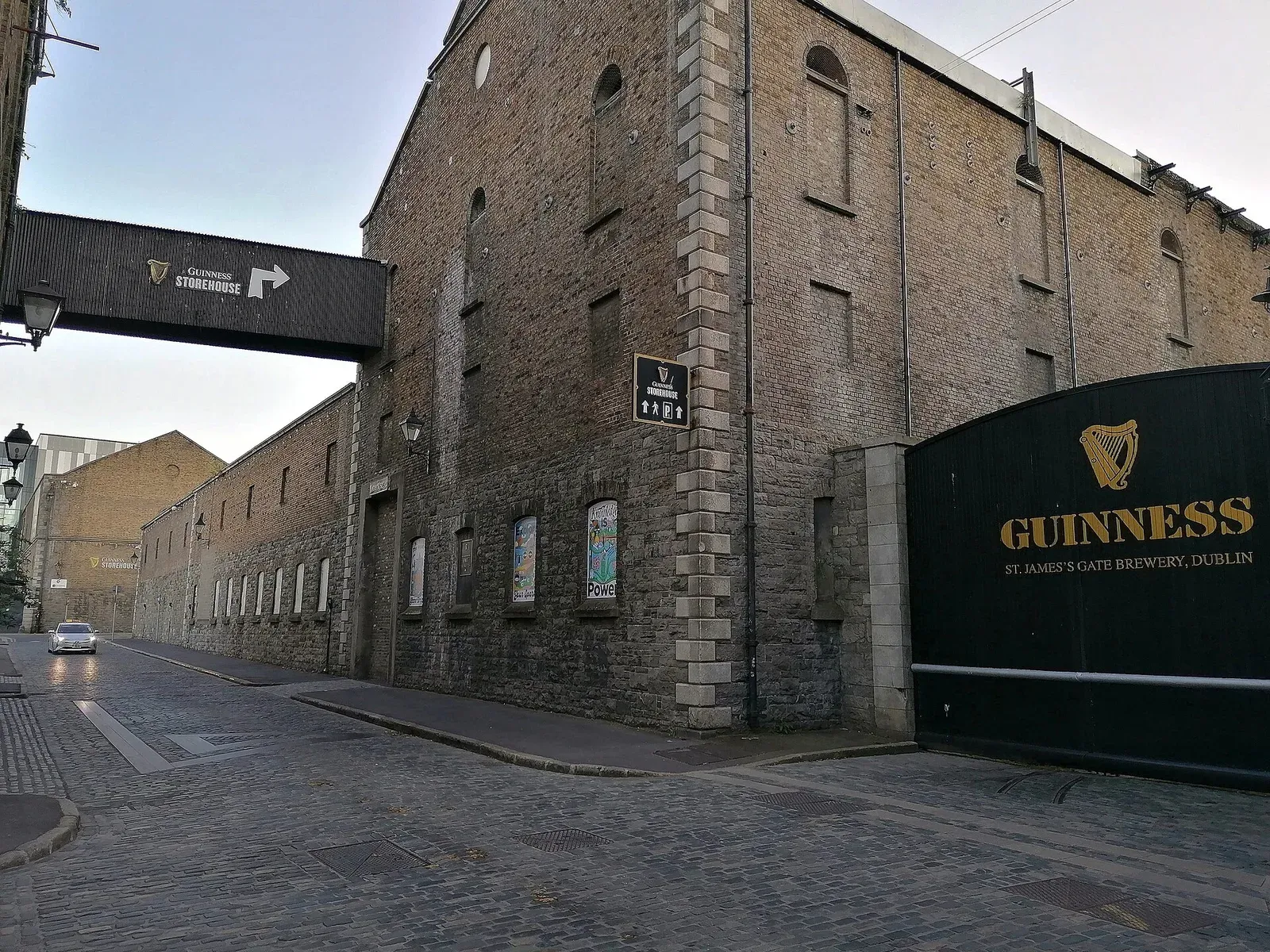
On 31 December 1759 a 34-year-old brewer signed a lease on a disused brewery in Dublin: four acres at St. James’s Gate, for £45 a year, for 9,000 years. Arthur Guinness had already run a small brewery at Leixlip with his brother, started with £100 left to him by the Archbishop of Cashel, his father’s employer. In Dublin he aimed higher.
From ale to porter
Guinness began with ale and built a good trade. In the 1770s he started brewing a new type of English beer, porter. It sold so well that in 1799 he brewed his last ale and kept to porter alone. Around 1810 the brewery added a “stouter kind of porter”.
The first known export left Dublin for England in 1796. In 1801 the brewery wrote a recipe for West India Porter, with more hops and alcohol to survive long sea voyages; in 1849 it became Guinness Foreign Extra Stout, still the best-selling Guinness in Asia, Africa and the Caribbean. By 1880 St. James’s Gate was the largest brewery in the world.
The harp
In 1862 Guinness put a label on its bottles with three parts: Arthur Guinness’s signature, the name, and a harp drawn from the 14th-century Brian Boru harp kept at Trinity College Dublin. The company trademarked it in 1876. When the Irish Free State took the same harp as its emblem in 1922, it had to turn it the other way round so as not to infringe the Guinness trademark. The state’s harp, facing the other way, appears on Irish coins and passports.
The nitrogen pint
In the mid-20th century draught beer grew popular, served cold from the tap. Michael Ash, a mathematician turned brewer, worked out how to pour stout with nitrogen, and in 1959 Guinness launched Guinness Draught, the world’s first nitrogenated beer. The nitrogen gives the thick, creamy head and the smooth feel. In 1988 the widget brought the same pour to the can, and won the Queen’s Award for Technological Achievement in 1991.
The style it shaped is the Irish dry stout: black, roasty and bitter, at 3.8–5% alcohol. The brewery still stands at St. James’s Gate, with many centuries left on the lease.
Sources
Checked .
- The Story of Guinness — Guinness Storehouse
- 15B. Irish Stout, 2021 Beer Style Guidelines — Beer Judge Certification Program
Image credits
- The Guinness gate at St. James's Gate Brewery, Dublin — Karlunun. CC0 1.0. Resized and converted to WebP
