Trappist beer: what the hexagon on the label means
Trappist beer: the three rules behind the Authentic Trappist Product label, the ten abbeys that brew it, and how it differs from abbey beer.
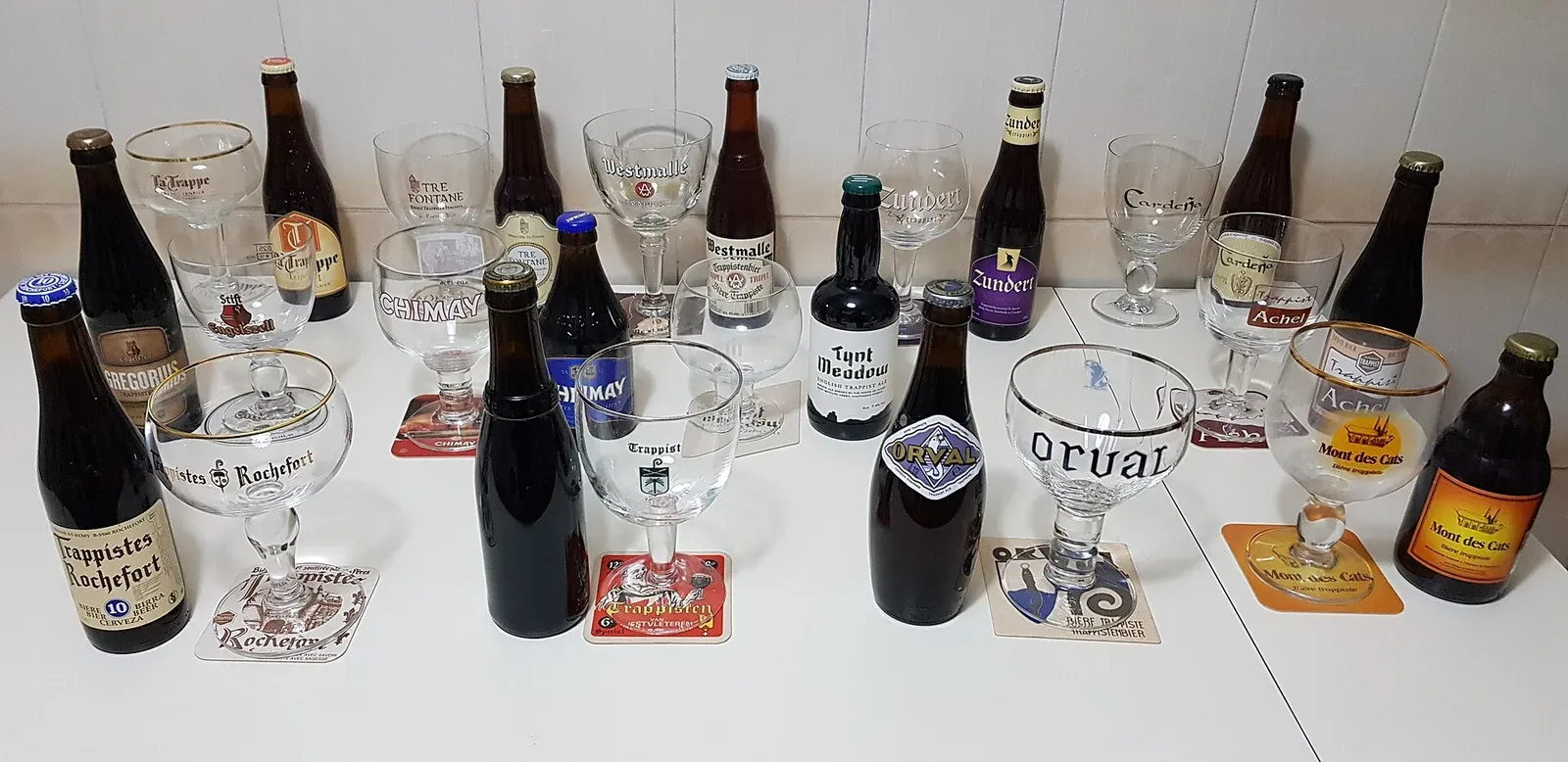
A small hexagonal logo on a bottle of Westmalle, Chimay or Orval reads Authentic Trappist Product. It is one of the few labels in beer that tells you who made the beer and where the money goes, not what is in it.
Who the Trappists are
The Trappists are monks and nuns of the Cistercian Order of the Strict Observance, a reform movement founded in 1664 at the abbey of La Trappe, near Soligny in Normandy. The beers you buy today are younger than their reputation: Orval and Westmalle sold their first commercial beers in the early 1930s, and Westmalle brewed its tripel inside the abbey walls in 1934.
The three rules
The International Trappist Association awards the label. To use it on a beer, an abbey must meet three criteria:
- the beer is made within the walls of the abbey, or in its immediate surroundings;
- the work happens under the supervision of the monks or nuns;
- the profits go to the needs of the community, to solidarity within the Trappist Order, or to development projects and charity.
The association’s inspectors visit the brewery and audit quality and traceability before its board votes. The licence runs for five years. Since 1997 the hexagon has marked the beers that pass. Most of these breweries employ lay workers, who brew under a monk’s supervision.
The ten abbeys
Ten member abbeys brew and sell Trappist beer: Westmalle, Westvleteren, Chimay, Rochefort and Orval in Belgium; La Trappe in the Netherlands; Mont des Cats in France; Cardeña in Spain; Mount St. Bernard in England; and Tre Fontane in Italy. Westvleteren sells its beer at the abbey gate, in wooden crates.
Trappist or abbey beer
Trappist is not a style. The abbeys brew blonds, dubbels, tripels and dark strong ales, and Orval referments its beer with Brettanomyces. What they share is top fermentation and, for most, refermentation in the bottle without pasteurisation. A beer brewed in the same styles by a commercial brewery, with an abbey’s name or picture on the label, is an abbey beer; Leffe is one.
Sources
Checked .
- Criteria for obtaining the ATP label — International Trappist Association
- Trappist beers — International Trappist Association
- Trappist breweries — The Oxford Companion to Beer, Oxford University Press
- Westmalle Tripel — Brouwerij der Trappisten van Westmalle
Image credits
- Bottles and glasses from Trappist breweries, among them Westmalle, Chimay, Rochefort, Orval and Westvleteren — Joxean. CC BY-SA 4.0. Resized and converted to WebP
