The Reinheitsgebot: Bavaria's beer law of 1516
The Reinheitsgebot: Duke Wilhelm IV's 1516 decree that beer be brewed from barley, hops and water, its two versions today, and why a 1918 politician gave it its name.
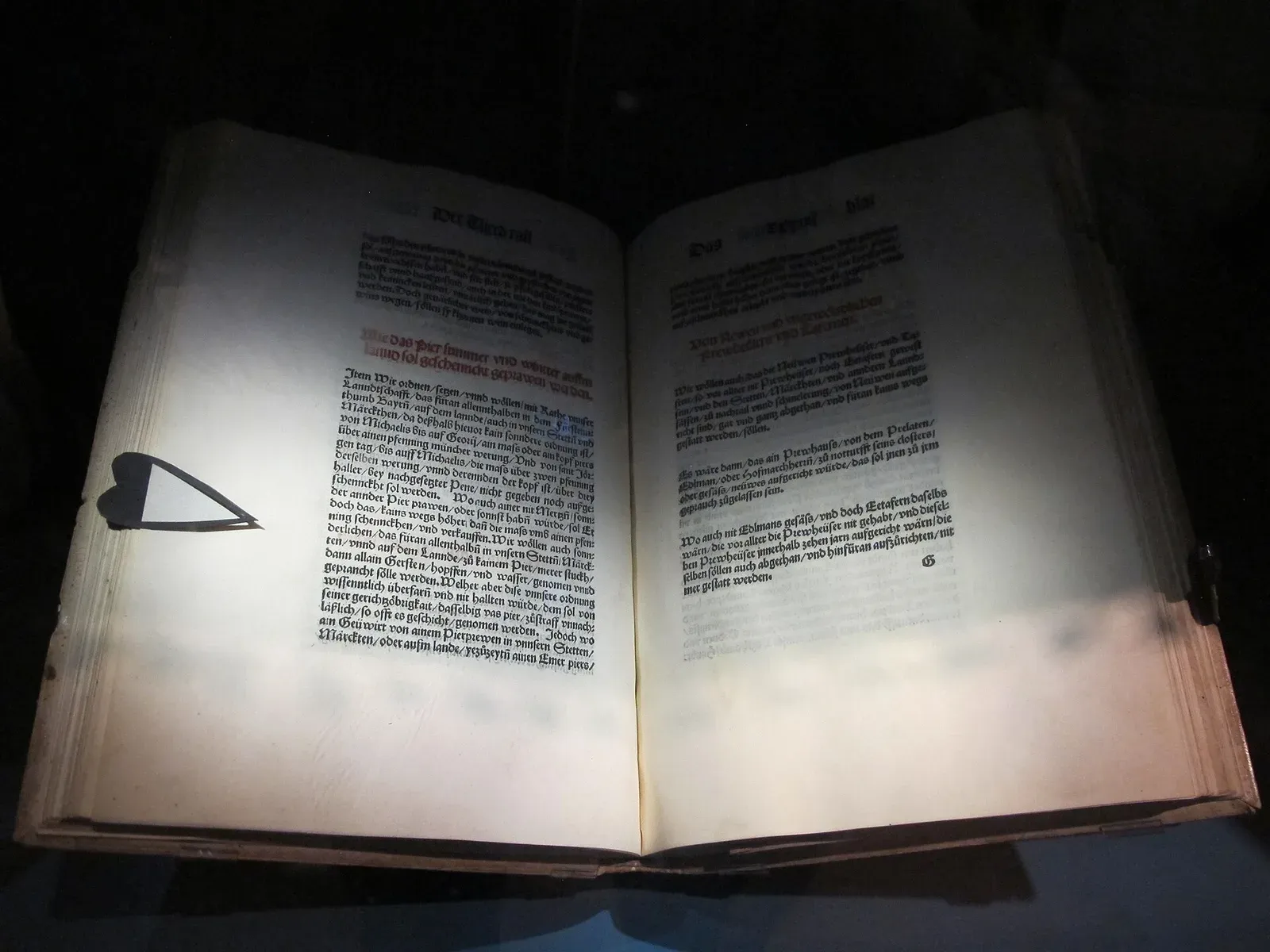
On 23 April 1516, at a meeting of the Assembly of Estates in Ingolstadt, north of Munich, Duke Wilhelm IV of Bavaria issued a decree on beer. In all his towns, markets and countryside, it said, “no other items be used for beer than barley, hops, and water.” Five centuries later many German brewers still name the law on their labels.
Barley, hops and water
The decree did not mention yeast. Brewers knew fermentation worked, but nobody had yet identified yeast as its cause; it joined the list after its discovery in the late 17th century. The authorities wanted to stop brewers who added unpleasant extras, some of them hallucinogenic plants, and banning wheat kept it for bread, the staple food.
For four centuries the law went by a plain name, Surrogatverbot, the ban on substitutes. The word Reinheitsgebot, purity order, came much later. Hans Rauch, a little-known member of the Bavarian State Parliament, coined it on 4 March 1918, in a heated debate about beer taxes.
Two laws, not one
Today there are two purity laws. The Bavarian one still limits bottom-fermented beers, the lagers, to barley malt, hops, water and yeast, and allows malted wheat and rye only in top-fermented beers such as Weissbier. The German version lets lager brewers add certain pure sugars and colourings made from them.
A “German Purity Law of 1516” never existed. In 1873 the German Imperial Law still protected northern brewers who used rice, potato starch and other substitutes, as long as they paid tax on them. Germany adopted the purity rule for the whole country only on 3 June 1906. When Bavaria joined the Weimar Republic in 1918, and the Federal Republic in 1949, it made keeping the law a condition.
The European Court and the label
In 1987 the European Court ruled that the law blocked beers brewed elsewhere in Europe, an unfair restriction of trade. Since then brewers from other countries may sell their beer in Germany as beer, whatever goes into it. German brewers must still follow the law for beer sold at home, though they may depart from it for export; in Bavaria the Bavarian version holds even then. A German brewer who breaks it can still sell the drink, but may not call it beer.
The law lives on today in section 9 of a provisional beer law of 29 July 1993, and many call it the oldest food law still in force. What it guarantees is a short list of ingredients, which suits a Helles or a Pils. Belgian brewers, who add sugar, spice and fruit, never had to follow it.
Sources
Checked .
- Reinheitsgebot — The Oxford Companion to Beer, Oxford University Press
- The Bavarian Beer Purity Law — History Today
Image credits
- The 1516 Bavarian beer law, printed in a book, on show at the 2016 Bavarian state exhibition in Aldersbach — Luidger. CC BY-SA 3.0. Resized and converted to WebP
