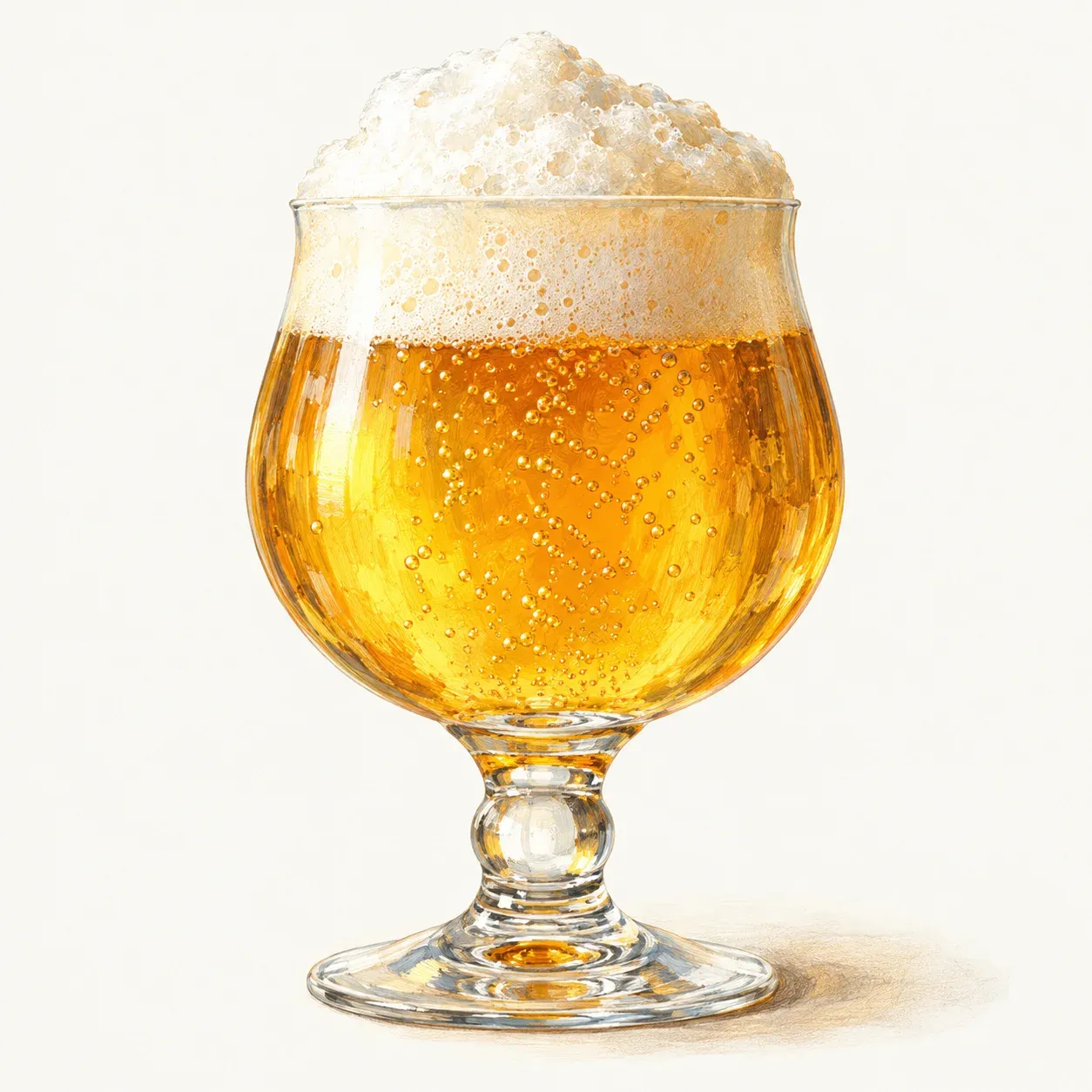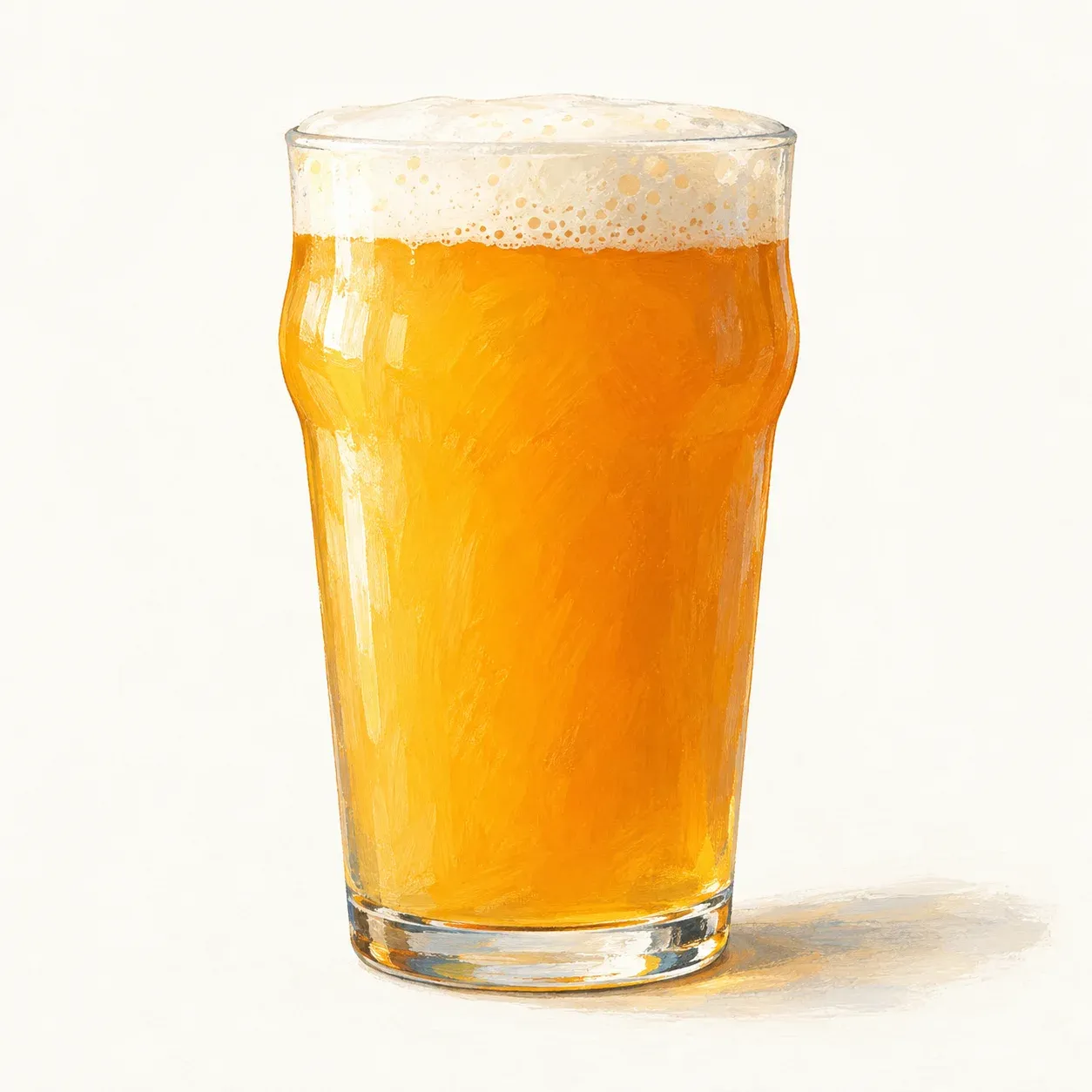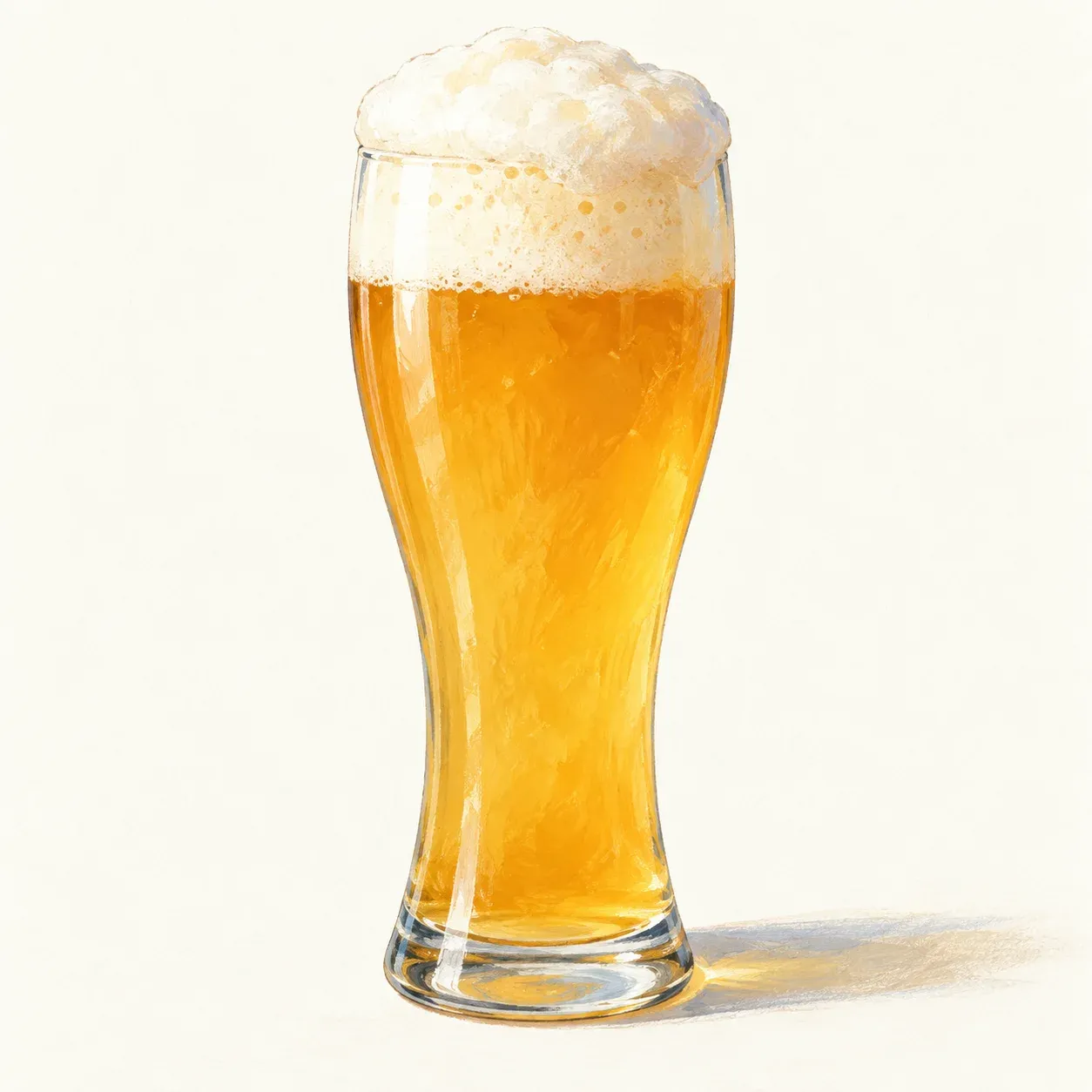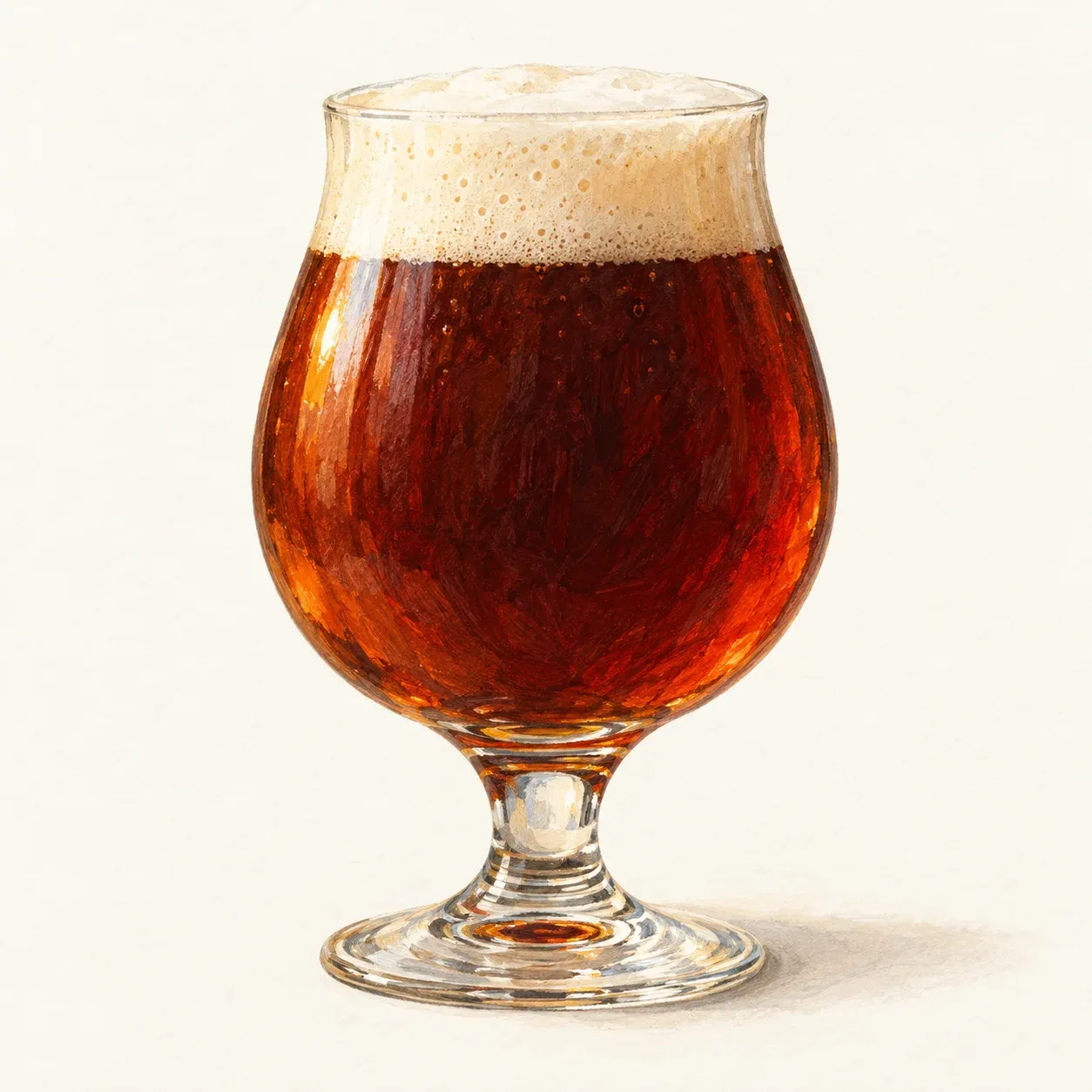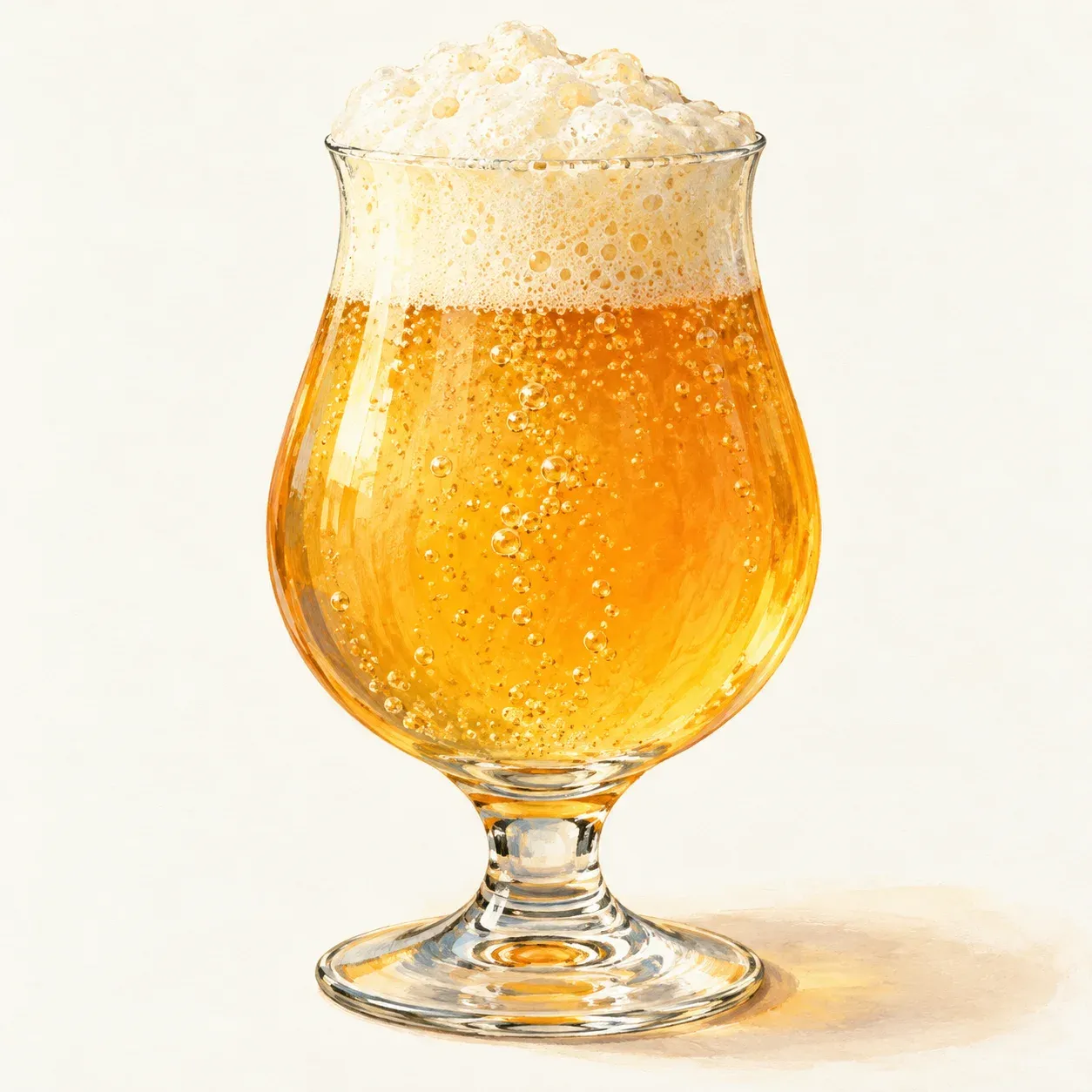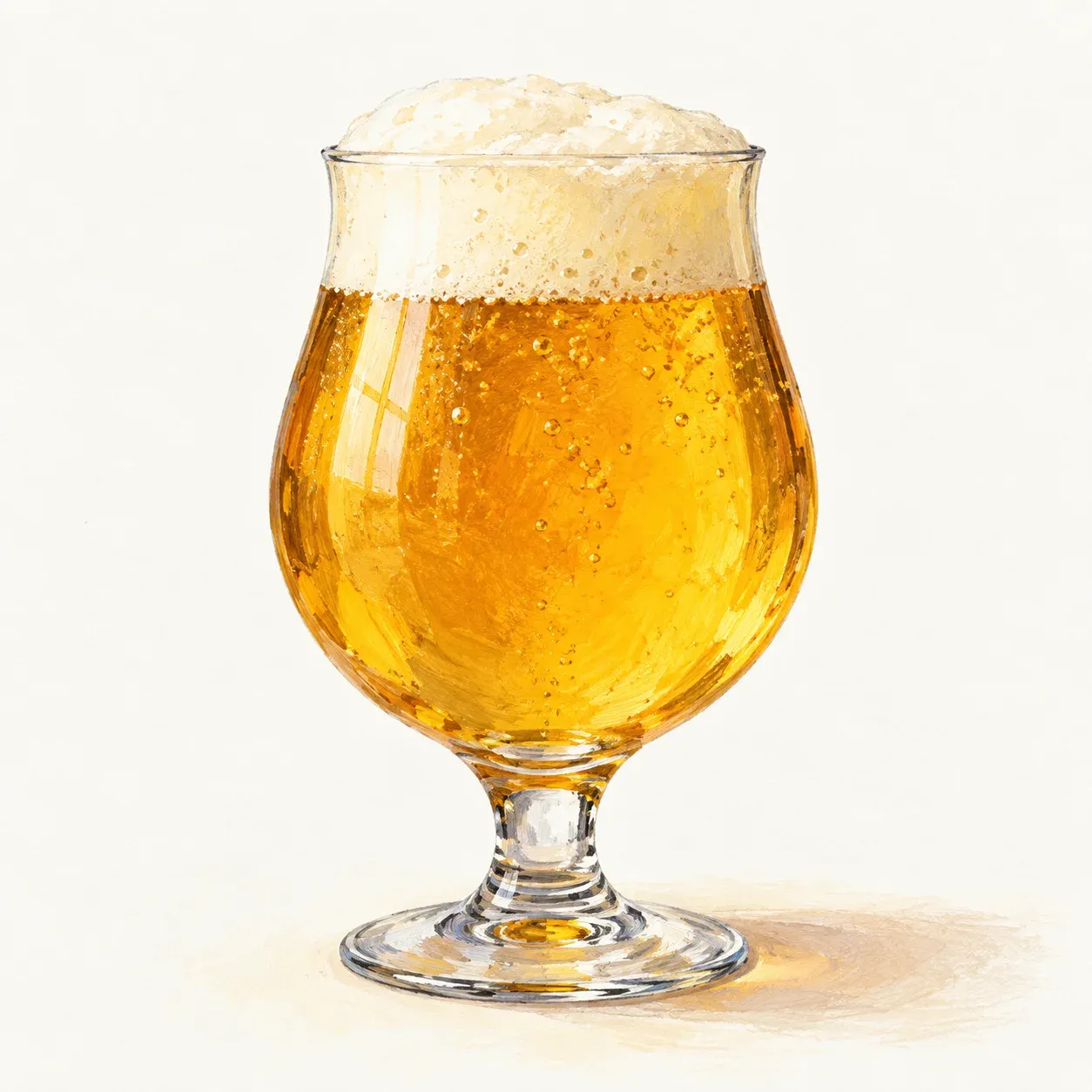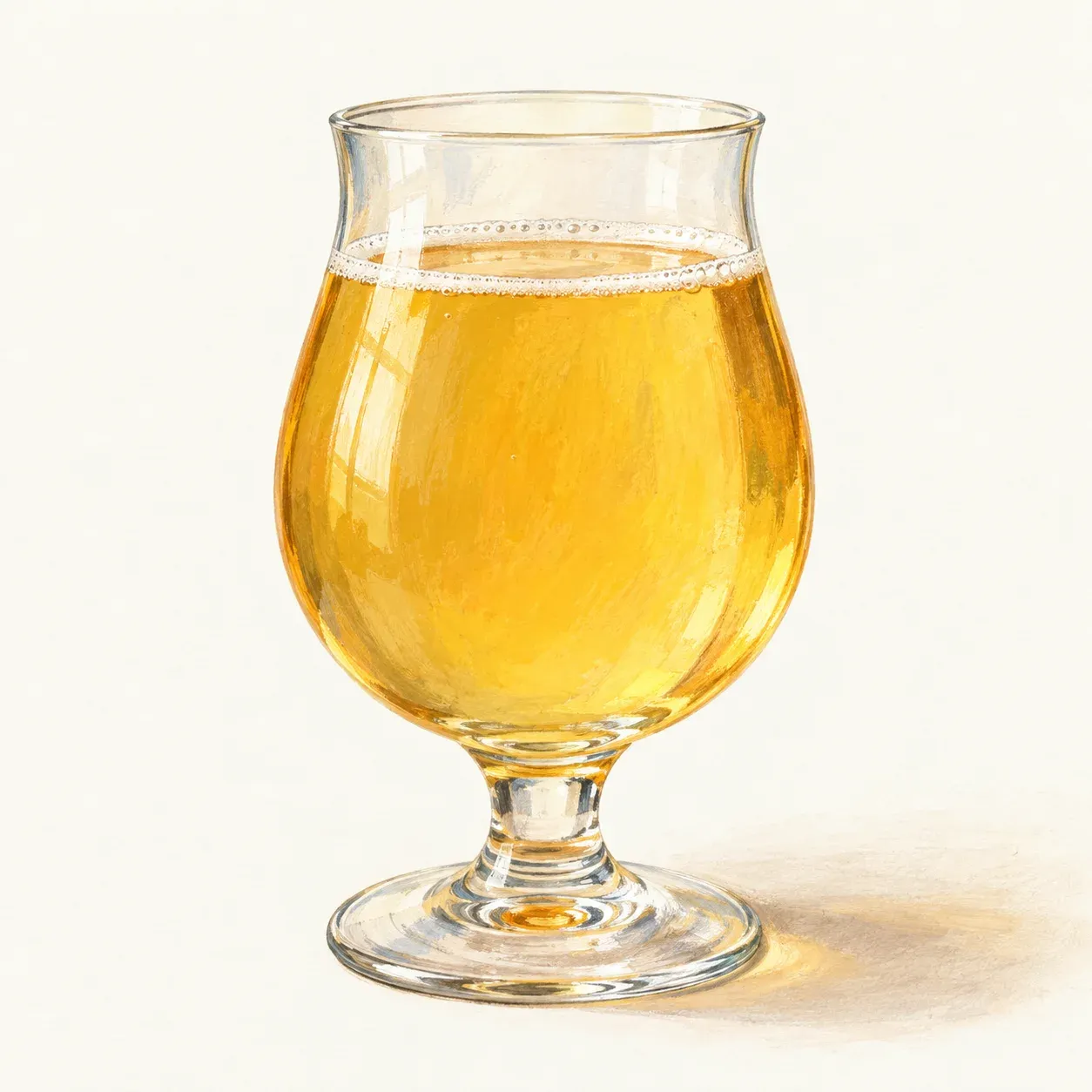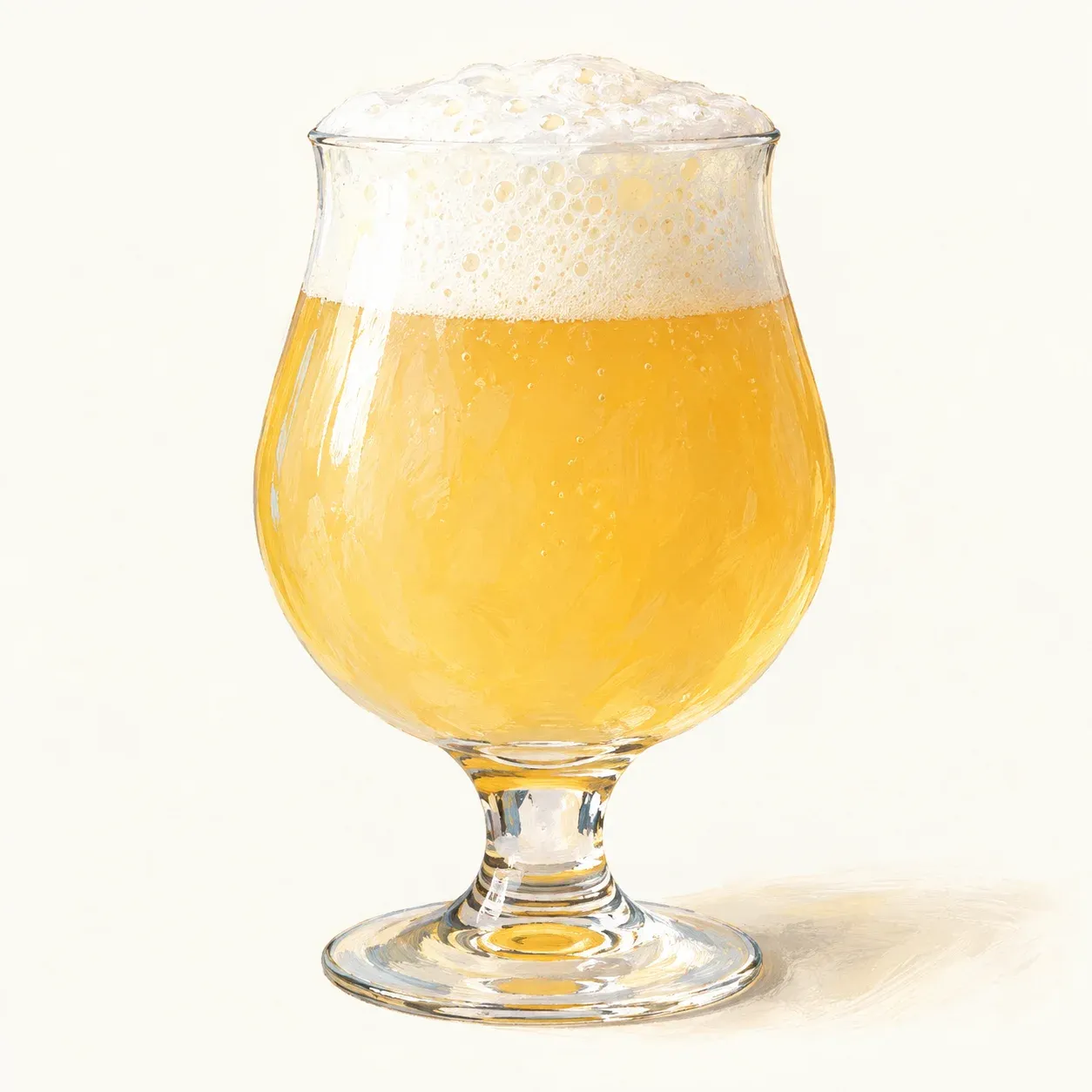
Wit means white, and a witbier pours pale and milky, cloudy from wheat and yeast, under a dense white head. You smell orange peel and a lemony spice from coriander before you sip. The taste is bready and soft, sometimes with honey or vanilla, with a low bitterness, a crisp dry finish and plenty of fizz. At about 5% it makes a light summer beer.
Where it comes from
Witbier belongs to a group of medieval white beers from around Leuven. The style died out in 1957, and in 1966 Pierre Celis revived it in the village of Hoegaarden, at the brewery that took the village’s name. After Interbrew bought Hoegaarden, the style spread fast, and the many witbiers brewed today trace back to Celis’s beer rather than to the medieval ones.
Brewers use 30–60% unmalted wheat, sometimes a little raw oats, and pale barley malt. They spice it with coriander seed and dried Curaçao orange peel, and some add a secret spice or two. A mild, fruity Belgian yeast does the rest.
How to serve it
Pour it at 4–7 °C into a tulip glass, and drink it young: witbier does not keep. It suits moules frites, and a mascarpone or a panna cotta for dessert.
Next to its neighbours
Witbier balances like a Weissbier, with low bitterness and plenty of wheat, but its spice and citrus come from coriander and orange peel, where the Weissbier takes banana and clove from its yeast.
Witbier in numbers
- Classic example
- Hoegaarden
- Original gravity
- 1.044–1.052
- Final gravity
- 1.008–1.012
- Spices
- Coriander seed and dried Curaçao orange peel
- Food
- Moules frites; mascarpone; panna cotta
- Classic examples
- Hoegaarden Wit; Allagash White; St. Bernardus Witbier; Blanche de Bruxelles; Celis White; Ommegang Witte
- BJCP style
- 24A Witbier
Sources
Checked .
- 24A. Witbier, 2021 Beer Style Guidelines — Beer Judge Certification Program
- Belgian-Style Witbier — CraftBeer.com, Brewers Association